
The Lab-Grown Diamond Advantage in Communication Technologies

The last few decades have seen a remarkable shift in global wireless communication networks from the first generation (1G) to the fifth-generation (5G) and now moving towards the 6th generation. Higher data rates, increased network capacity and improved connectivity are factors that are driving the evolution in cellular wireless networks. But as telecommunications is advancing rapidly, conventional semiconductor materials have reached their limits.
When electronic components are pushed to work harder and faster, they generate more heat in the given space, creating an obstacle to better performance. However, there is a solution - CVD diamonds. They are now proving to be valuable in managing heat and providing structural support in communication technologies.
In this blog, let us understand the science behind why diamonds work so well for this purpose.
Advantages of Lab-Grown Diamonds
The core properties of lab-grown diamonds is the result of its rigid network of carbon atoms formed by strong covalent bonds. Diamond's atomic structure provides them with remarkable physical, thermal and optical properties.
The Heat Conduction in Diamonds

When it comes to metals, the heat is carried by free-flowing electrons. Whereas in case of diamonds, heat travels through lattice vibrations, known as phonons. The highly ordered atomic structure reduces heat scattering at room temperature. This enables high-purity single-crystal CVD diamond to deliver thermal conductivity above 2000 W/m·K. What this does is it makes diamonds one of the best materials for high-power microchips.
Excellent Durability
It is well-known that diamond is one of the hardest known materials on earth. Diamonds have the ability to withstand massive compression forces. With a Young's Modulus ranging from 900 to 1100 GPa, diamonds possess exceptional stiffness and mechanical stability. The result? These properties help maintain the structural integrity even under extreme temperatures.
Electrical and Optical Characteristics
Pure CVD diamonds that have not been doped tend to be an excellent electrical insulator. The wide bandgap of 5.45 eV helps withstand massive electric fields without resulting in any breakdown. With high thermal conductivity and large bandgap, diamond is suitable for high power and high frequency devices such as field effect transistors and Schottky diodes (SDs). This is because diamonds can sustain high breakdown fields. Additionally, diamond shows high optical transparency owing to its electronics structure, making it suitable for optoelectronic applications.
Impact on 6G Communications
Today, mobile technology has achieved a massive quantitative leap. The 6G technology is set to connect the world on another level with the integration of wireless and satellite communication. The 6G era is set to involve upgrading of devices be it the core chip, RF device or base station.

Managing Extreme Heat
As devices become smaller and more compact, semiconductor devices are pushed to operate at increasingly higher power densities. The heat they generate is concentrated into a shrinking area - hot-spot heat flux in next-generation GaN devices can exceed 30,000 W/cm², roughly five times the heat flux at the surface of the sun. At these levels, thermal management stops being a design consideration and becomes the limiting factor on what the device can do.
In the upcoming years, 6G technology will require very high frequency signals (called sub-THz frequencies) for transmission of large amounts of data at much faster speeds. However, looking at this requirement, traditional materials like use for making electronic components might fall short and lose on the signal quality. They can create unwanted electrical effects (known as parasitic effects) that distort signals above 10 GHz, reducing the efficiency of communication devices.
The CVD Diamond Solution
CVD diamonds provide an answer to this. The thermal conductivity of diamonds falls between 2000 to 2200 W/mK which makes them the best choice for removing heat while also maintaining the signal quality. What this does is it results in passive electronic components including resistors to operate at frequencies above 20 GHz.
Furthermore, when these diamond substrates are used with electrically conductive diamond materials, it will allow manufacturers to build smaller, efficient and more reliable 6G wireless base stations.
Impact on Radar Systems
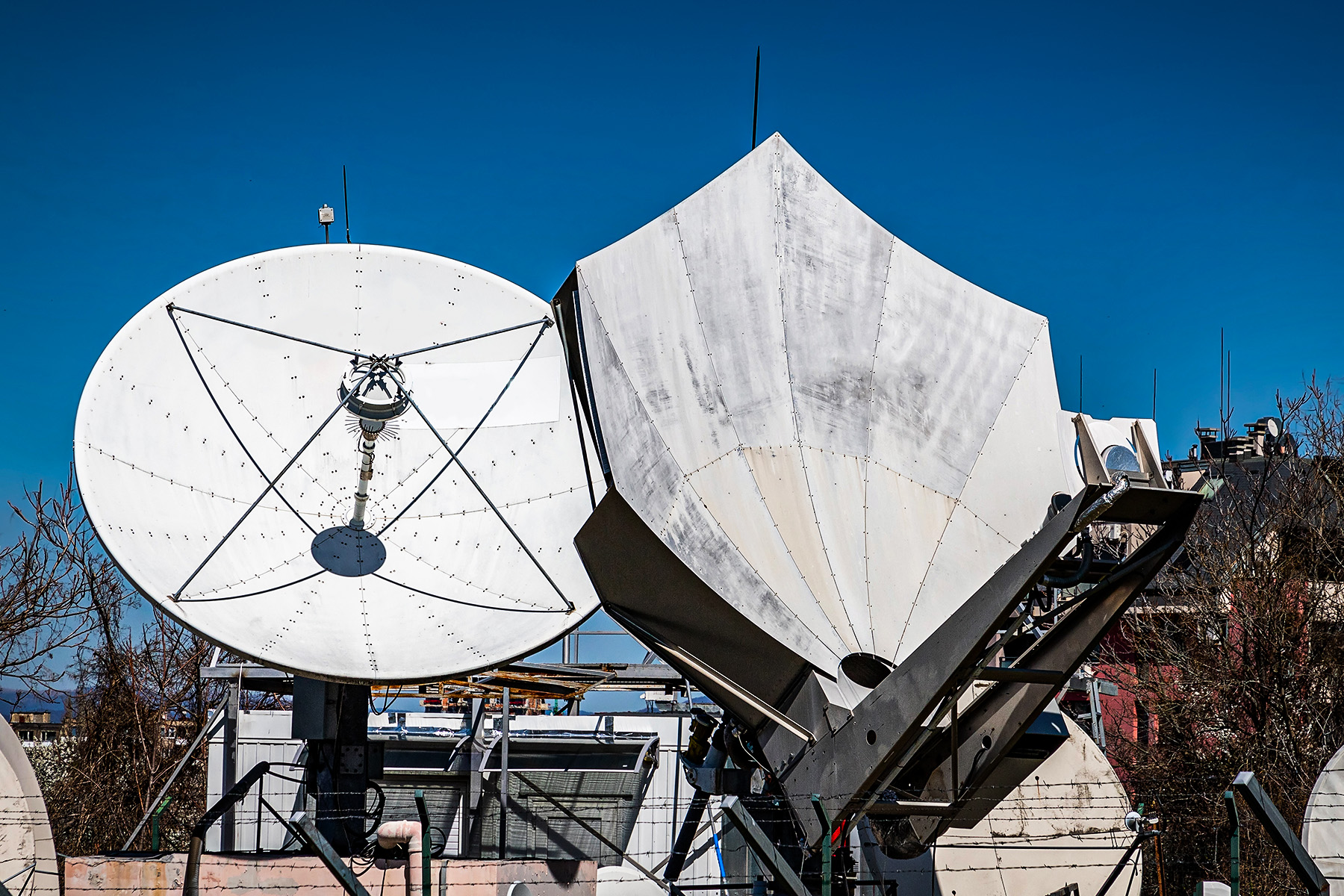
Radar uses a transmitter to emit electromagnetic radiation in a specific direction. As these waves come near the object they bounce back to the radar. This way the radar receives the reflected signal and calculates how far away the object is. The radar antenna does a dual functioning of both sending and receiving the signals.
Where CVD Diamonds Fit in Radar Systems
In addition to thermal management, CVD diamonds also serve as an excellent quantum sensing medium. When NV centers are engineered in the carbon lattice, CVD diamonds can function as a highly-sensitive receiver for RF and microwave signals. The inclusion of CVD diamonds is a better alternative to classical antennas as the electronic properties of CVD diamonds create an ideal host environment for these systems.
The different properties of diamonds including dielectric constant (5.7), critical breakdown electric field (>10^7 V/cm) and the high acoustic velocity (18 km/s) of diamonds helps withstand high electromagnetic stresses.
1. Real-Time RF Signal Analysis
Scientists have developed a diamond-based sensor that can detect and analyze a wide range of radio frequency (RF) signals in real time. The high-speed sensing capability helps detect complex and fast-changing RF signals, making it valuable for advanced radar and defense technologies.
2. Object Detection
Diamond-based quantum sensors can measure the distance to objects with remarkable precision by analyzing reflected radio signals. This helps radar systems detect and track objects more accurately, making them ideal for navigation, defense, and autonomous technologies.
3. Detecting Weak Radar Systems
Traditional radar systems often struggle to detect weak signals from distant or small objects. However, diamond-based quantum sensors utilizing NV centers can help with the detection of signals with greater sensitivity, improving radar accuracy and reliability. Scientists also use highly pure diamonds and optimize the placement of NV centers to further enhance performance for defense, aerospace, and advanced communication systems.
In Summary
In conclusion, as we are witnessing rapid advancement in the telecommunications sector, companies building 6G networks and defense systems using advanced radar will require scanning wide ranges with precision. The race toward 6G and more advanced radar systems is no longer just about faster processors or better software. It is also dependent on the materials that power these technologies.
The addition of diamonds will bring in exceptional heat management, enabling electronic devices to operate more efficiently, reliably, and at higher frequencies. This makes them a valuable material for industries ranging from telecommunications to defense.
Frequently Asked Questions
Here are some interesting FAQs on 6G and Radar systems:
“redefining one diamond layer at a time”
More Articles
%20vs%20(110)%20vs%20(111).jpg)


Aga9 Systems is a lab-grown diamond manufacturing company dedicated to harnessing the valuable properties of CVD diamonds for industrial applications. We at Aga9 Systems manufacture more than lab-grown diamond plates, we are dedicated to creating brilliance ethically, sustainably and with maximum resource efficiency.