
Managing Heat in AI Data Centers And The Role of Lab-Grown Diamonds

We are exposed to data from everywhere be it - social media, phones, TV, computer and other electronic devices. At the core lies data centers, silently powering every byte of information we consume. With the rise in artificial intelligence, data centers are being pushed to their maximum thermal limits.
GPUs support AI workloads in modern data centers as they are capable of handling thousands of parallel operations simultaneously. However, this leads to intense heat build up in compact spaces. If left as is, this heat buildup affects reliability and performance of data center operations, leading to hardware failures, increased downtime, and higher energy consumption.
With lab-grown diamonds, we have got a breakthrough solution to address this challenge. In this blog, let us understand how lab-grown diamonds can effectively tackle and manage heat in AI data centers.
The Growth of AI Data Center
AI data centers are changing the way we manage and process data. An AI data center is a facility that supports artificial intelligence workloads. The rise in AI is the reason driving the growth of AI data centers. As AI data centers are growing at a rapid pace, there will be an increase in the requirement for massive amounts of computing power.
Computing power is required to train models, process data and run applications.
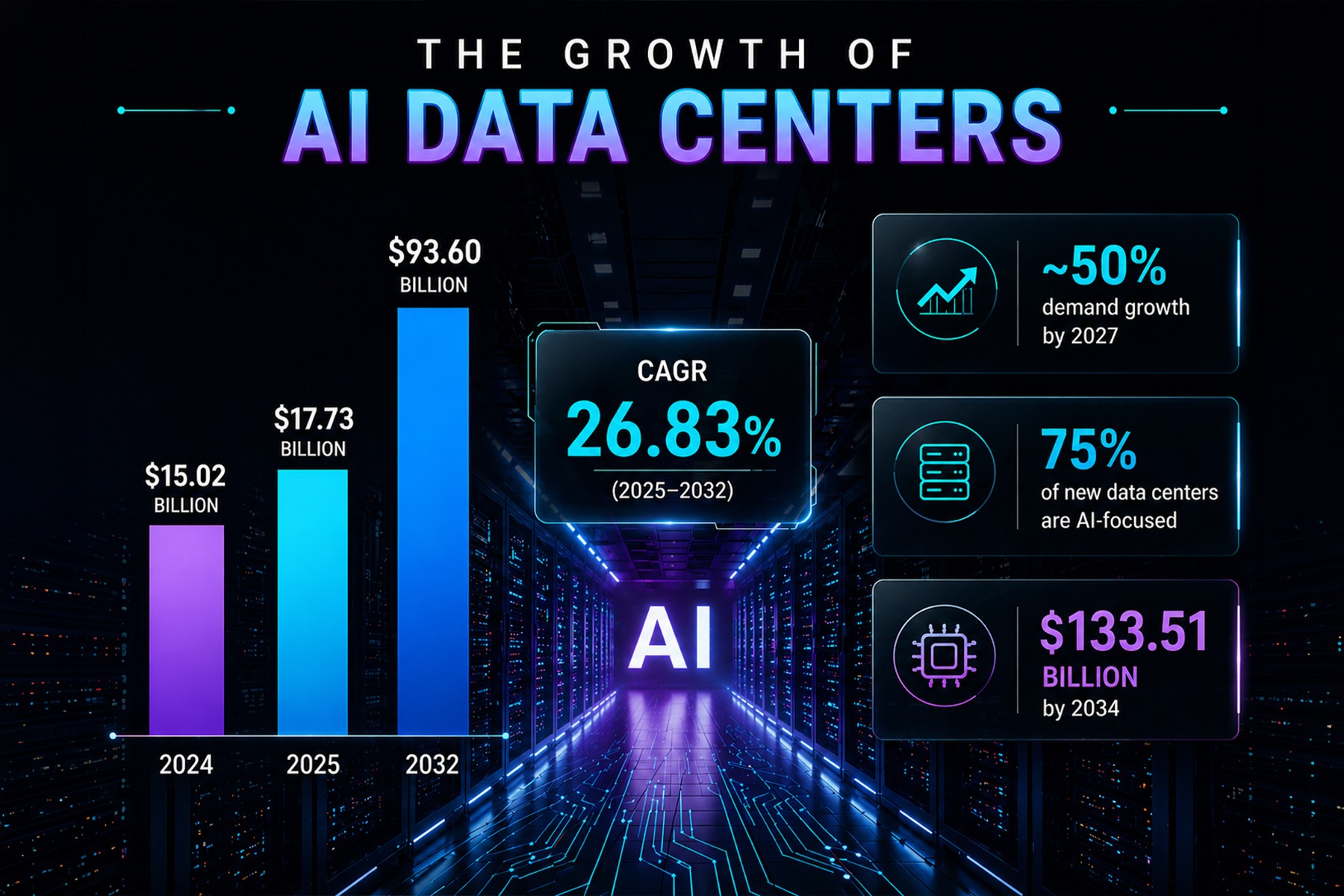
This rising demand is the driving factor for more data centers especially for supporting massive AI workloads. The global AI data center market stands at 17.73 billion in 2025 which is projected to increase USD 21.27 billion by 2026 and USD 133.51 billion by 2034. There is expected to be high demand for AI data centers in the future.
As per Goldman Sachs Research, the demand for data centers is expected to grow by about 50% by 2027. The increasing demand for data centers requires immense investment. In recent times, AI data centers have been the focal point of many discussions. Nearly 75% of new data centers are set to be designed keeping in mind AI workloads.
In 2024, the global AI data center market stood at 15.02 billion which is expected to rise from USD 17.73 billion (2025) to 93.60 billion (2032). This reflects a compounded annual growth rate of 26.83%.
Why Heat is An Issue in Data Centers?
Over the last few years, there has been massive growth of computational power. The different components of a data center including high-performance GPUs consume a lot of power, out of which most of that gets converted to unwanted heat. The real problem is when this gets multiplied by billions of devices, then there comes an even bigger problem.
If the internal temperature of the chip exceeds maximum rating, it influences the reliability which in turn shortens the life or results in complete chip failure. The International Energy Agency estimates that the infrastructure of global data centers consumed about 460 terawatt-hours of power in 2022 which accounts for 2% of all global electricity usage.
In addition, a single rack of equipment has the tendency to draw 140,000 watts, which is a lot of heat concentrated in a small space. The rise of AI workloads has significantly elaborated the heat crisis situation. The thermal design power of GPUs has exceeded 700 watts from to 150 watts currently over the past two decades.
At the rack level the figures seem to be astonishingly large. A single rack of equipment for an AI workload exceeds 40 kW, while an AI optimized server draws up to 10 kW on its own. GPU rack power density has climbed nearly tenfold in under a decade, rising from 15 kW to 132 kW per rack. The number is said to reach 240 kW by 2026 which is anticipated to be the next threshold.
Plus when high-performance systems pack these components into close proximity, the problem expands rapidly. This results in the following consequences:
- Heat builds up faster and does not get dispersed
- Temperature variations between adjacent components become more severe
- Prolonged exposure to extreme temperature results in electromigration and dielectric degradation within the chips
Without proper thermal management, this could affect the long-term reliability of AI infrastructure.
Consequences of Extreme Heat in Data Centers
For efficient operation of a data center it is mandatory to maintain an optimal temperature. Heat directly impacts the reliability of any device as the internal temperature rises above the maximum limit. What this does is it affects the life of the device and results in complete chip failure.
1. Exposure to High Temperature
Prolonged exposure to high temperature affects the wear time of the components, lifespan of the hardware and reliability. Sustained stress also leads to system downtime, disrupted operations and high maintenance costs.
2. Performance Constraints
Hardware that overheats is forced to enter into throttle mode as it prevents damage, slows down processing speeds and ultimately reduces efficiency. This results in reduced efficiency, slow workloads and limited overall system output.
3. High Operational Costs
Poor thermal management requires putting more emphasis on cooling systems and as such more electricity gets consumed in order to maintain safe operating temperatures. Since the cooling systems work harder and require more electricity, organizations incur increased operational expenses and high utility costs.
How Will Lab-Grown Diamonds Reduce Heat in AI Data Centers?
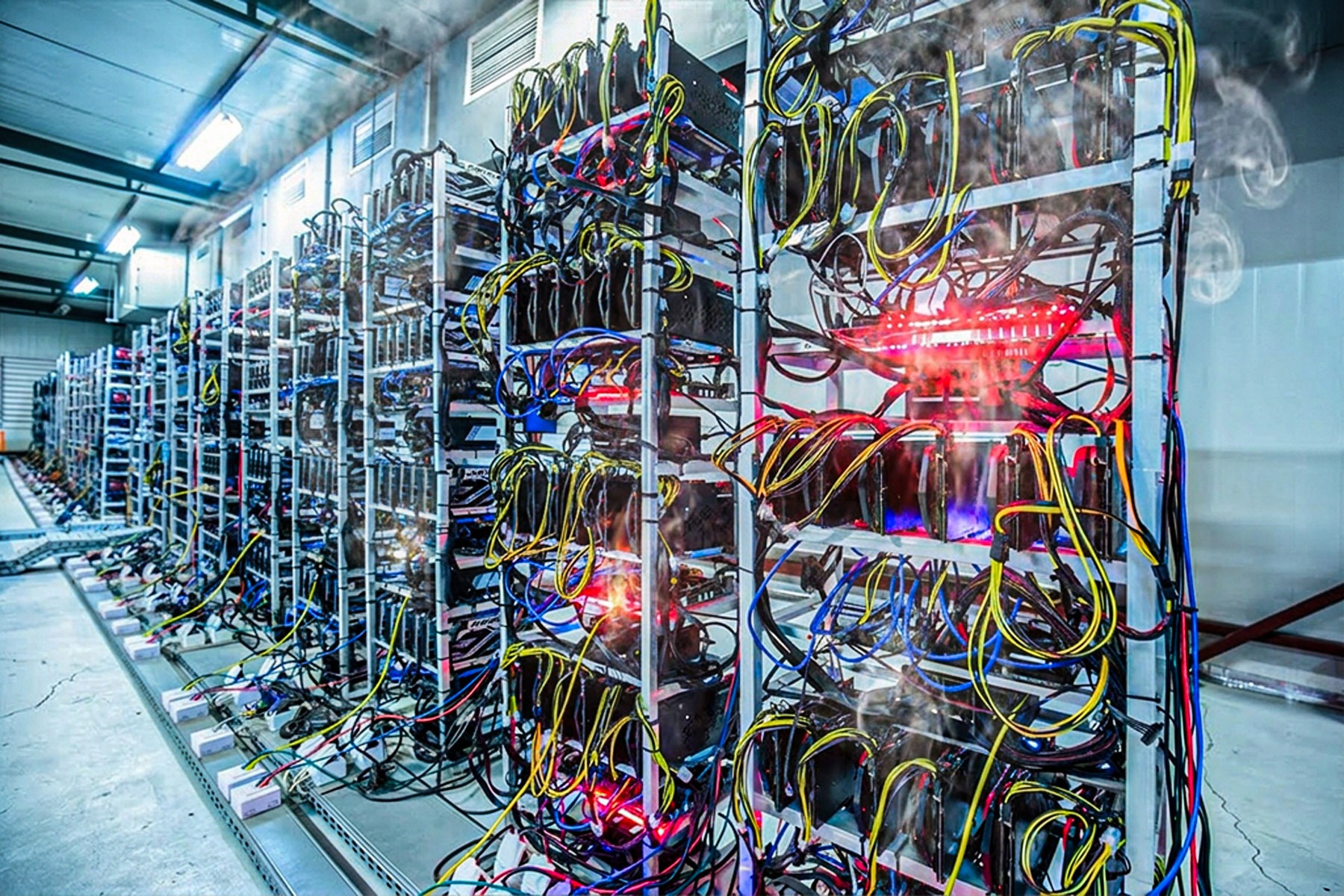
Tech companies are paving the way for more data centers supporting the latest AI models. Operating AI models requires significant electricity to be generated. Sadly, most of the electricity gets wasted as heat which spills out of billions of transistors in a modern chip.
The functioning of AI chips releases intense heat especially GPUs and tensor processors. The incredible characteristics of lab-grown diamonds makes them a perfect fit for AI chips. There have been recent developments in the manufacturing of diamond semiconductors for moving heat from one place to another.
The effective dissipation of heat allows the chips to run faster without releasing any overheating. The best part about lab-grown diamonds is the sustainable manufacturing process without any damage to the environment.
Challenges and Shortcomings in Deploying Lab-Grown Diamonds
To deal with the rising menace of heat in AI data centers, it is important to find a solution that is sustainable and offers many advantages. That is where lab-grown diamonds will prove to be valuable. Lab-grown diamonds have gained immense prominence today and are increasingly being considered as an alternative to mined diamonds. But the problem lies in producing lab-grown diamonds as there are several obstacles associated with its production process.
Let us look at the challenges and shortcomings in producing lab-grown diamonds:
1. High Production Costs
The manufacturing process of lab-grown diamonds involves high production costs. The primary reason for the increase in these costs includes the cost of the equipment, energy and the raw materials required in the production process.
2. Reduced R&D
Lab-grown diamonds (LGDs) in data centers is still an upcoming field. However, there is a continuous requirement of R&D to recognize its full potential. The shrinking margins will leave an impact on companies from investing in innovation. This will cause critical advancements in areas such as diamond-based semiconductors, thermal management films and high-frequency electronics come to a halt.
Without R&D investment, lab-grown diamonds have the risk of being overtaken by alternative materials like silicon carbide or gallium nitride in high-performance applications.
3. Economic Uncertainty
AI data centers require massive capital investment. This can be a primary reason why companies may delay infrastructure upgrades during economic downturns, especially the ones that involve expensive LGD components.
Plus the high cost of lab-grown diamond components will create hurdles especially for smaller data center operators. Not to forget the currency fluctuations and trade tariffs that will impact cross-border sourcing of LGDs and make it more expensive.
How can AGA9 Systems Help?
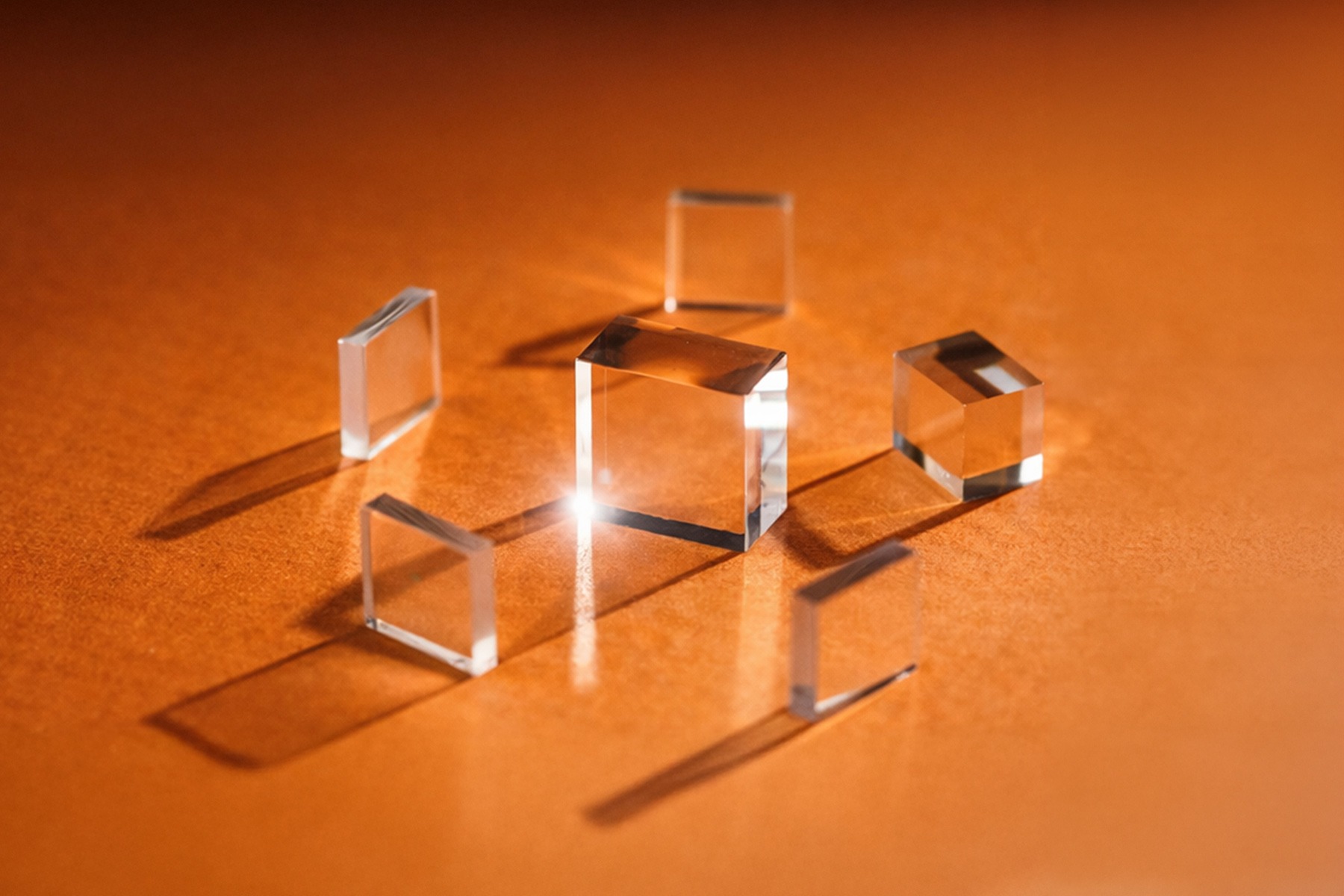
AGA9 Systems manufactures high-quality CVD diamond plates perfect to meet the rising demands for AI data centers. With thermal conductivity between 1500 to 2000 W/mK, our thermal grade diamonds offer exceptional heat dissipation for GPU-intensive workloads. Additionally, quality is non-negotiable at AGA9 Systems since our diamond plates maintain impurity levels below 1 ppm and surface finish of RMS <5-15 nm.
Sustainable, precise, and research-driven AGA9 Systems CVD diamond plates are engineered to power the next generation of AI infrastructure sustainably and precisely.
Conclusion
In conclusion, heat is an unavoidable by-product of computation. CVD diamond plates are the future. As AI data centers are seeing an upward trajectory, the gap between traditional cooling infrastructure and modern hardware is only set to widen.
The thermal conductivity of CVD diamonds, which is several times greater than copper, represents one of the most promising solutions in terms of chip-level heat dissipation.
Manufactured under precisely controlled conditions, CVD diamonds offer a reliable solution addressing growing thermal challenges of advanced AI computing environments.
Frequently Asked Questions
“redefining one diamond layer at a time”
More Articles

%20vs%20(110)%20vs%20(111).jpg)


Aga9 Systems is a lab-grown diamond manufacturing company dedicated to harnessing the valuable properties of CVD diamonds for industrial applications. We at Aga9 Systems manufacture more than lab-grown diamond plates, we are dedicated to creating brilliance ethically, sustainably and with maximum resource efficiency.