
Benefits of Electronic Grade CVD Diamonds in Semiconductors

A considerable growth in high-power and high frequency electronics is seen in the semiconductor industry. The technological evolutions in electric vehicles, 5G, renewable energy, and aerospace are the factors driving the growing demand. As demands intensify, silicon-based devices have reached their limits in terms of voltage-breakdown, heat-dissipation, and device-efficiency.
Synthetic electronic-grade chemical vapor deposition (CVD) diamonds, featuring ultra-wide bandgap and record-breaking thermal and mechanical properties, are capable of addressing these challenges. In this article, let’s explore the role of electronic grade diamonds and how Aga9 Systems diamond plates offer an edge.
The Shift Towards Advanced Materials
These constraints have heightened concerns regarding energy waste and the effective management of thermal loads. High-power applications, including AI (artificial intelligence) chips, GPU (graphical processor units) chips, and other harsh environment applications, are now shifting their focus from silicon carbide (SiC) and gallium nitride (GaN) devices.
In applications involving harsh environments such as spacecraft, there is a need for the devices to function efficiently at high temperatures. Diamonds are proving to be the “ultimate semiconducting materials for cooling solutions and beyond”.
About Electronic Grade Diamonds
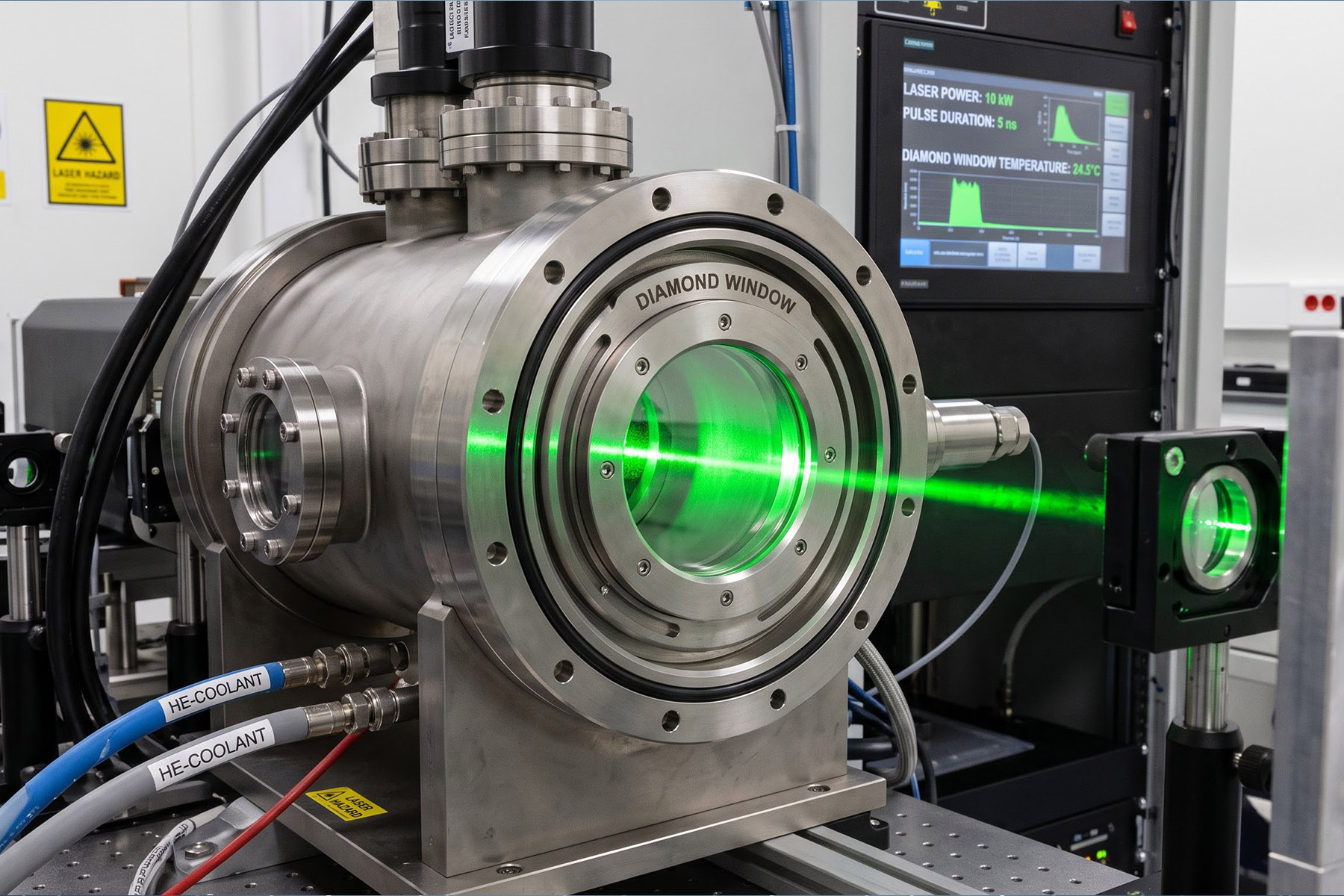
Electronic grade lab-grown diamonds are synthetic diamonds having ultra-high purity and designed to perform well in semiconductors. Derived using the microwave plasma method, the content of nitrogen and boron is extremely low, which gives the final product with great surface finish, crystalline quality and electronic properties.
Electronic grade lab-grown diamonds possess ideal properties needed for semiconductors. The wide band gap of 5.45 eV, thermal conductivity of 2200 W/m-K, and high electric field up to 10 MV/cm ensure better heat management compared to silicon devices. High purity electronic grade diamonds possess remarkable hole mobility and electron mobility of > 2000 and carrier lifetime values of ~2000.
Beyond thermal management, electronic grade diamonds are beneficial in applications such as high-energy particle detection and quantum communication. For thermal management applications specifically, polycrystalline diamonds are often preferred due to their efficiency and scalability.
The Hidden Bottlenecks in Existing Semiconductor Materials
The existing materials used for semiconductors come with their own set of setbacks, which are discussed below:
1. Silicon (Si)
Silicon has long served the semiconductor industry. But it has its limitations too. The material will not serve the purpose in high voltage and high frequency operations. Its switching frequency is below 100 kHz which makes it less effective for modern day devices.
2. Silicon Carbide (SiC)
The wider bandgap of silicon carbide presents an edge over silicon. But it suffers from many challenges
- The production cost of manufacturing SiC wafers is more expensive than silicon.
- The thermal conductivity of SiC is not as good as compared to diamonds. This means in extreme environments SiC will not dissipate heat effectively.
3. Gallium Nitride (GaN)
First things first, Gallium Nitride (GaN) inches a step ahead when compared to SiC. Despite its advantages, GaN compromises on its thermal performance compared to diamonds and SiC. Some of its limitations include - limited voltage range and short-circuit withstand time.
Benefits of Lab-Grown Diamonds For Semiconductors
Diamond belongs to the class of Ultra Wide Band Gap (UWBG) semiconductors. The dielectric breakdown strength of diamonds is far better than other materials. These characteristics make diamond transistors and diodes better over Si-based thyristors in high-power applications. Let us understand below how lab-grown diamonds will be a boon for semiconductors:

1. Thermal Conductivity
Diamonds have the highest known thermal conductivity. It is 5 times greater than silicon carbide and 10 times greater than Gallium Nitride. This characteristic makes it a perfect addition to reduce the temperature within the device. What this does is it helps the device function for longer under extreme conditions.
2. Wide Bandgap and High Voltage
Diamonds have an ultra-wide bandgap. Simply put, this means diamonds can handle voltages far better than other materials. Its band gap energy stands at 5.47 eV making it capable of handling higher electric fields. This allows high power converters to perform with stability even under strenuous conditions.
3. Good Breakdown Strength
The breakdown strength of diamonds is exceptional as well. It features a high breakdown field of 10 mv cm which is quite higher than SiC and GaN. This means diamond based devices will be able to handle higher voltages with greater power without the risk of dielectric breakdown.
4. Exceptional Electron Mobility
The remarkable electron mobility is due to the unique crystal structure and strong atomic bonds of diamonds. This property allows diamond-based semiconductors to achieve fast response time. In power electronics, this characteristic is particularly helpful as it reduces losses during switching which results in less heat generation. Microwave devices, advanced communication systems and radio frequency amplifiers where rapid signal processing is crucial will benefit from diamond semiconductors.
The Switch From SiC and GaN to Diamonds
SiC and GaN are being used in Electric vehicles, RF applications, power supply and many more areas. However, today industries are discovering the use of synthetic diamonds in applications involving high-power electronics.
While SiC and GaN have long been ruling, lab-grown diamonds are the next leap forward. It blends power, thermal control, and sustainability. The physical properties of lab-grown diamonds are far better compared to SiC and GaN. Hence industries are considering adopting lab-grown diamonds for high-power electronics.
How AGA9 Systems Lab-Grown Diamonds Will Help?
As industries continue to demand high power efficiency, the limitations of traditional materials have become more evident. Aga9 Systems has a solution to offer here. We can help businesses achieve results with our range of single crystal and polycrystalline diamond plates.
Our diamond plate solutions are manufactured sustainability with minimal environmental impact. We can effectively help find a groundbreaking solution to many limitations of traditional materials. By leveraging thermal, optical, mechanical, and electronic properties of diamonds, Aga9 Systems enables businesses to overcome challenges faced by materials such as silicon, silicon carbide, and gallium nitride.
Choose AGA9 Systems diamond plates today and overcome the limitations of conventional materials.
Conclusion
In conclusion, diamonds offer a promising future for next generation semiconductors. They possess excellent physical properties. Today's devices need power density, operating frequency and reliability all at the same time.
Lab-grown diamond involves low cost diamond production with high purity compared to natural diamonds. Lab-grown diamonds will be at the pinnacle addressing demanding industrial applications. The performance of diamonds is exceptionally superior to SiC and GaN.
As more industries are seen pushing boundaries, lab-grown diamonds will offer a solution that is future-proof. They are here to offer performance, energy-efficiency and reliability as never seen before.
Frequently Asked Questions
“redefining one diamond layer at a time”
More Articles

%20vs%20(110)%20vs%20(111).jpg)


Aga9 Systems is a lab-grown diamond manufacturing company dedicated to harnessing the valuable properties of CVD diamonds for industrial applications. We at Aga9 Systems manufacture more than lab-grown diamond plates, we are dedicated to creating brilliance ethically, sustainably and with maximum resource efficiency.