
NV Centers in Lab-Grown Diamonds

What if the defects in diamonds turn out to be more useful than its purity?
Purity holds paramount importance when it comes to the production of diamonds. However, there are certain impurities that have the potential to unlock advanced functionalities. Color centers in diamond are at the forefront of emerging quantum technologies, from quantum networks and magnetometry to nanoscale sensing in biology.
The prime reason for their role in quantum technologies is because they are extremely stable and possess excellent optical properties. With few crystal defects, especially the nitrogen-vacancy center, they have the ability to locally detect and measure a number of physical quantities including magnetic and electric fields.
In this blog, we will understand more about NV centers and their role in lab-grown diamonds.
About NV Centers in Diamonds
NV centers in diamonds are special defects in diamonds that are ideal for use as sensors for temperature, stress detection and magnetic field. The process of producing NV centers involves replacing a nitrogen atom with one carbon atom. Further, the neighbouring carbon atom is removed to form a vacancy within the diamond lattice.
The nitrogen-vacancy (NV) center in diamonds is an important physical system for quantum technologies including:
- Quantum metrology
- Information processing
- Nanotechnologies
- Communications
Physical Properties of NV Centers
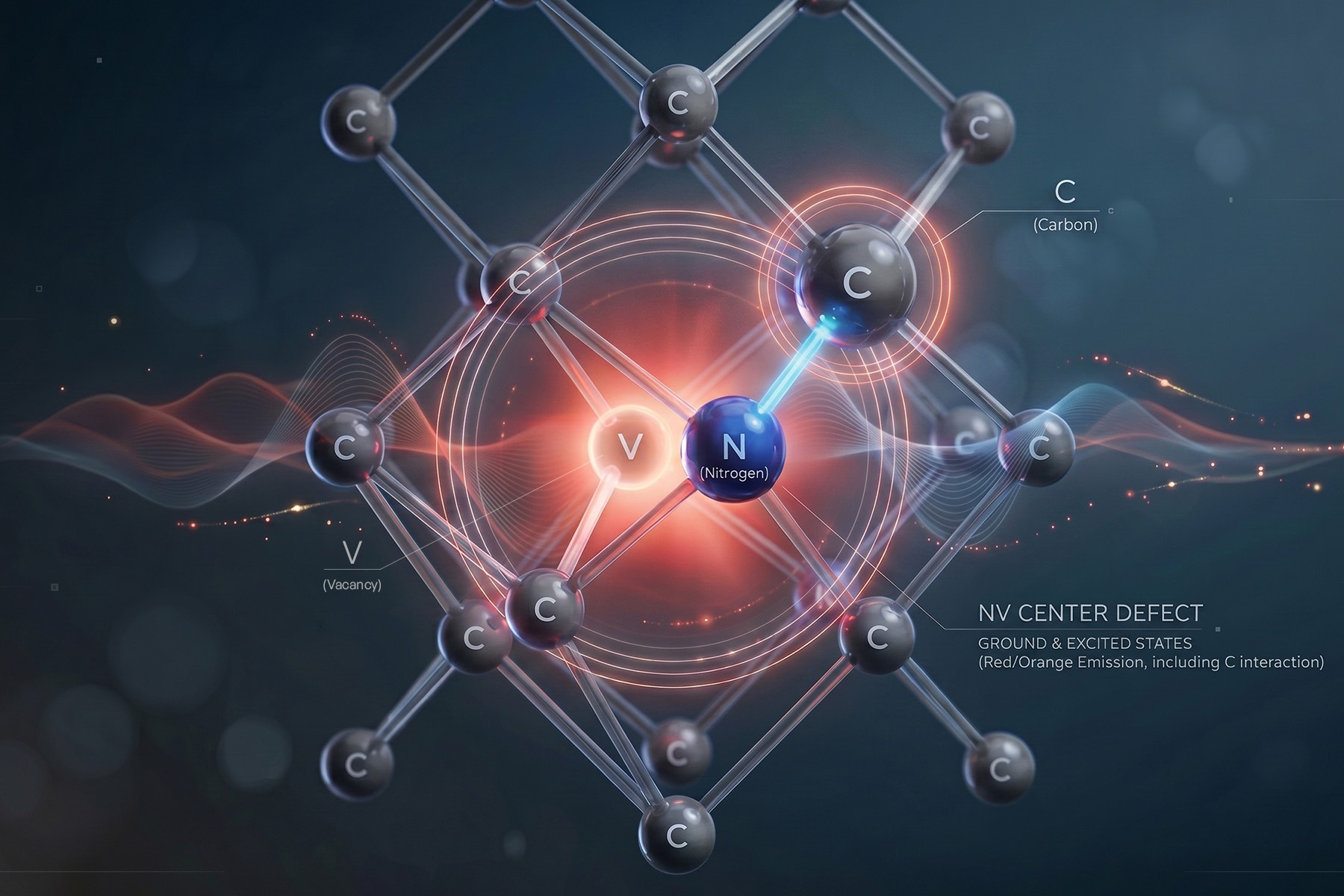
In this section, let us understand the physical properties of NV centers:
a. Long Spin Coherence and Optical Readout
NV centers have one remarkable feature that is long spin coherence time. This enables stable quantum states to be encoded and manipulated. Furthermore, the NV center has certain fluorescence properties which allows for optical initialization and readout of its spin state. This makes them a suitable fit for quantum computation and sensing.
b. Resilience To Environmental Fluctuations
NV center qubits show excellent durability against environmental changes including - temperature fluctuations and magnetic field noise. The primary reason includes the unique spin properties and topological protection. This property makes them perfect fit for real-world quantum applications.
c. Different Charge States
NV centers in diamonds have different neutral states namely (NV0) and (NV-). Both of these differ in terms of optical and spin characteristics. The negatively charged state of the defect is excellent for quantum computing and sensing. This is simply because the system allows for easy initialization of the spin state, controls it accurately over a long time and is possible to read out by pure optical techniques.
d. Photostability and Optical Performance
NV centers showcase excellent photostability without resulting in photobleaching or blinking. Due to this it enables the construction of reliable single-photon sources operating at room temperature and can be applied in biology where NV defects play an important role as fluorescent labels.
Role of NV Centers in Lab-Grown Diamonds
The NV centers in diamonds are defects that have the power to transform passive material into an advanced quantum and sensing platform.
1. Capable of Detecting Small Variations
NV centers have the capability to detect extremely small variations in magnetic and electric fields, temperature, and strain at the nanoscale. These properties makes them ideal for different applications including:
- Biomedical imaging
- Navigation systems
- Material characterization
Since their sensitivity is so high they can measure the signals at the level of individual molecules.
2. Acts as Excellent Qubit
NV centers have excellent features which makes them ideal for quantum information systems. Since the electron spin has a very long coherence time it can last up to several seconds which makes it perfect to function as a qubit.
The best part is that the qubit in an NV center can work with a large range of temperature up to room temperature. Furthermore, the electron spin in an NV center also works as nuclear spins.
This additional property adds a unique feature that can be used as extra qubits to store and process quantum information.
3. Interaction With Photons
There is another unique property of electron spin in NV centers wherein they have the ability to interact with photons. Photons are elementary particles of light which can decode information from the electron spin to photons, making it possible to send quantum states over long distances.
This amalgamation of NV centers and photons makes them ideal to develop quantum networks.
Applications of NV Centers in Lab-Grown Diamonds
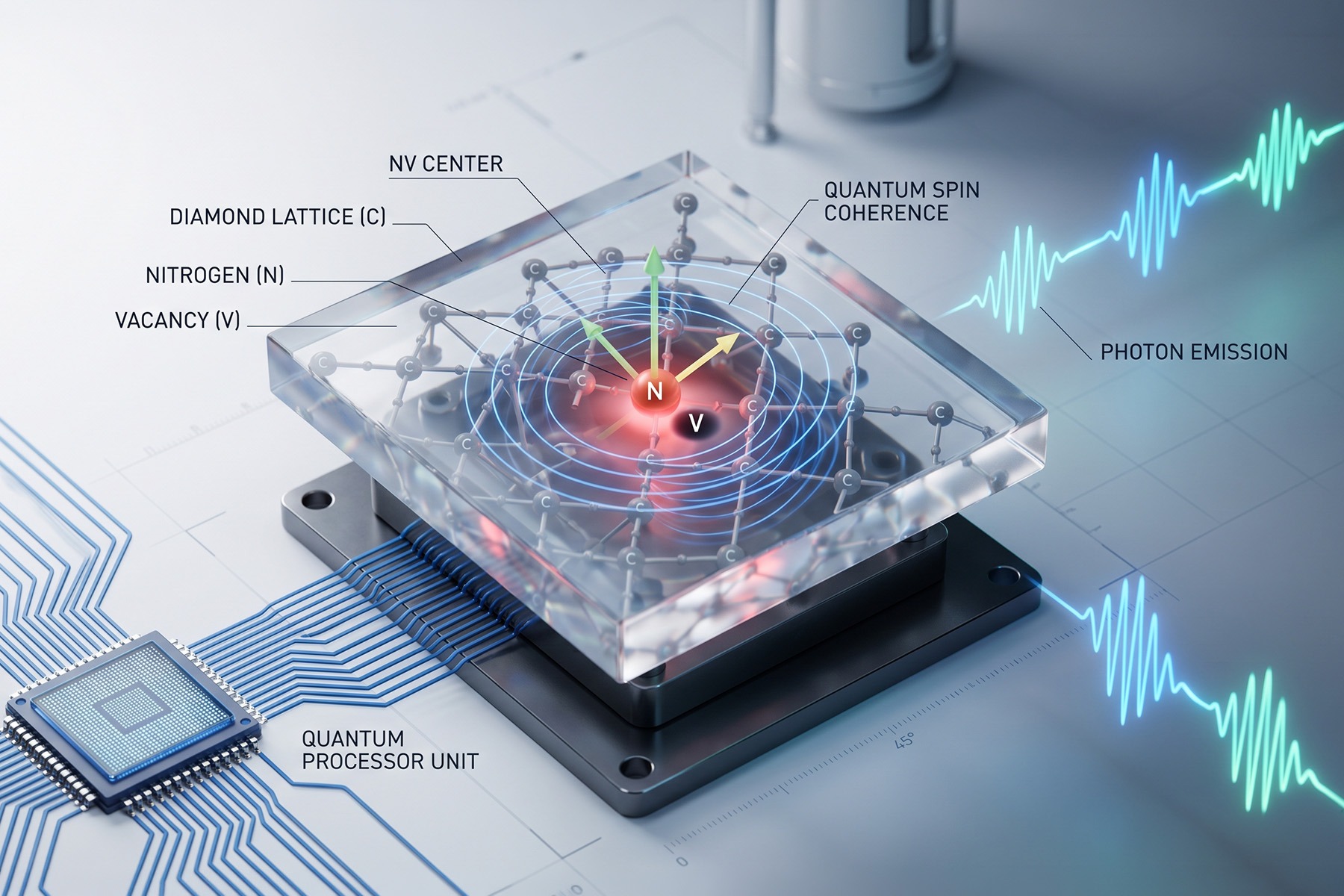
a. Quantum Computing and Quantum Communication
The special structure of NV centers in diamonds enables spin states to be measured at room temperature.
The presence of spin-orbit coupling and high Debye temperature provides long spin-lattice relaxation time for NV-electron spins. This is the primary reason why the NV center defect in diamond holds crucial importance for quantum computing and quantum communication.
b. Quantum Information Science
Quantum information science is the process of harnessing the power of quantum mechanics and information sciences to build innovative technologies including quantum sensors, networks and computers.
c. Nanomagnetism
NV centers are sensitive to magnetic, electric, and thermal fields which makes them an excellent tool for nanoscale metrology. They have the tendency to detect magnetic fields from ~ 10 μT to several Tesla. Furthermore, the high gradient tolerance and dynamic range of NV sensors make them ideal to operate in challenging industrial environments.
NV-based quantum sensors are an excellent alternative to traditional hall-effect sensors for detecting fractures in steel tendons and prestressed concrete structures. Additionally, by tracking the ionic movement and phase transitions within energy storage systems, NV sensors help develop safer and more efficient battery technologies.
d. Biosensing and Medical Applications
The biocompatibility of diamond and the photostability of NV centers represent significant achievements in the life sciences. Fluorescent nanodiamonds containing NV centers can be internalized by living cells, acting as non-toxic quantum sensors.
NV centers can operate as high-precision thermometers due to the temperature-dependent shift of the zero-field splitting parameter D. This property enables effective monitoring of localized temperature changes within cells. This makes them extremely useful for investigating metabolism and cellular signaling.
Future trends indicate that combining NV-based biosensors with AI and machine learning algorithms could transform real-time monitoring and disease outbreak prediction.
How AGA9 Systems Diamond Plates Benefit?
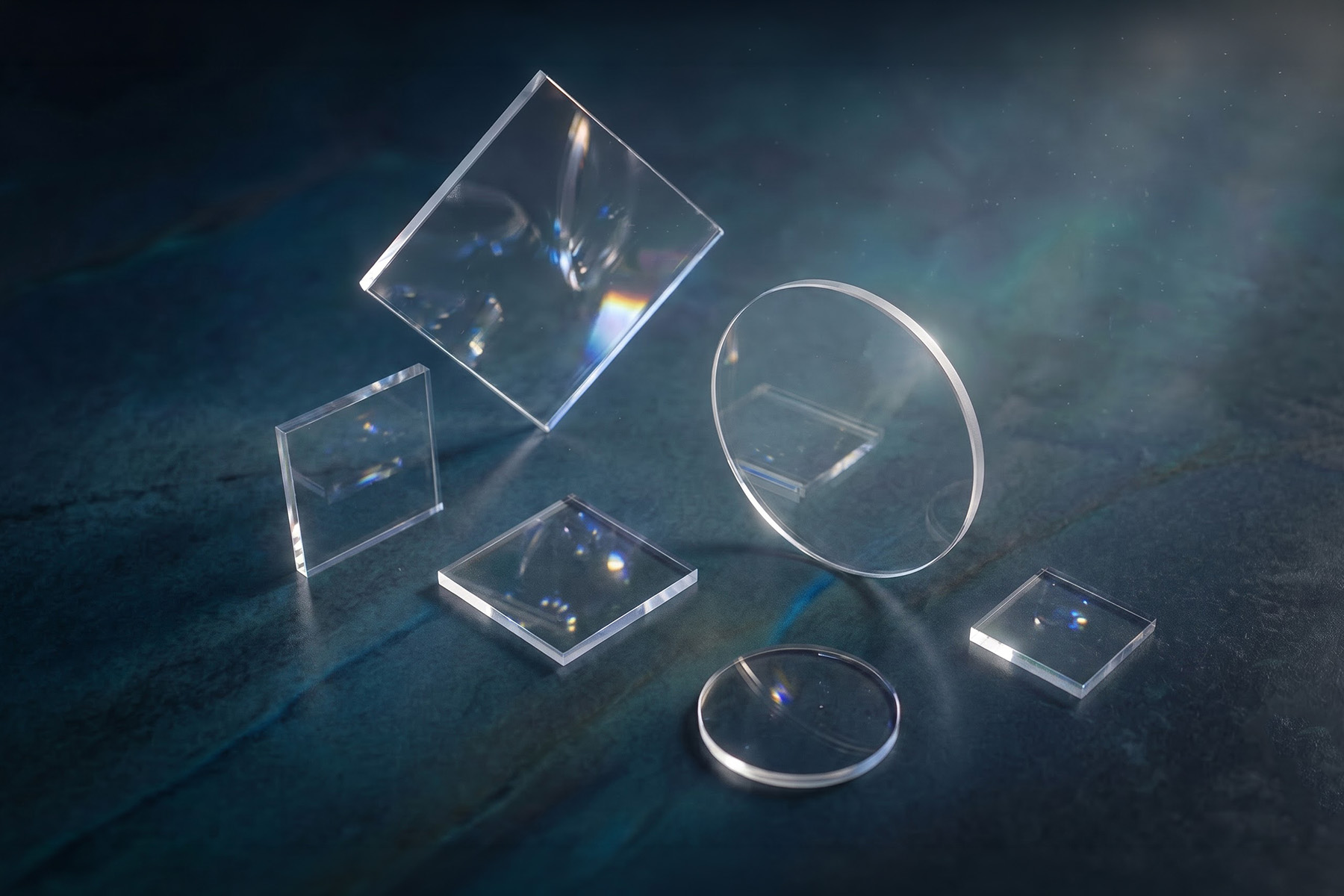
The quality of the diamond plate determines how well they perform. AGA9 Systems produces lab-grown diamond plates using the Chemical Vapor Deposition growth process. Our diamond plates are engineered to meet the most demanding industrial and quantum applications.
With low impurity levels and exceptional surface finish, our diamond plates make for a strong substrate in NV center-based technologies.
Key Takeaways
Nitrogen vacancy centers (NV centers) in particular are an interesting defect in diamonds for technological applications due to their optical accessibility. What truly sets NV centers apart is their remarkable stability and resilience in real-world environments.
As the ability to refine these defects will improve in the years to come, the diamond, once just a symbol of permanence, will become an excellent option for the next generation of high-speed computing and life-saving medical diagnostics.
Frequently Asked Questions
“redefining one diamond layer at a time”
More Articles
%20vs%20(110)%20vs%20(111).jpg)


Aga9 Systems is a lab-grown diamond manufacturing company dedicated to harnessing the valuable properties of CVD diamonds for industrial applications. We at Aga9 Systems manufacture more than lab-grown diamond plates, we are dedicated to creating brilliance ethically, sustainably and with maximum resource efficiency.