Diamond Windows for High Energy Laser Machines
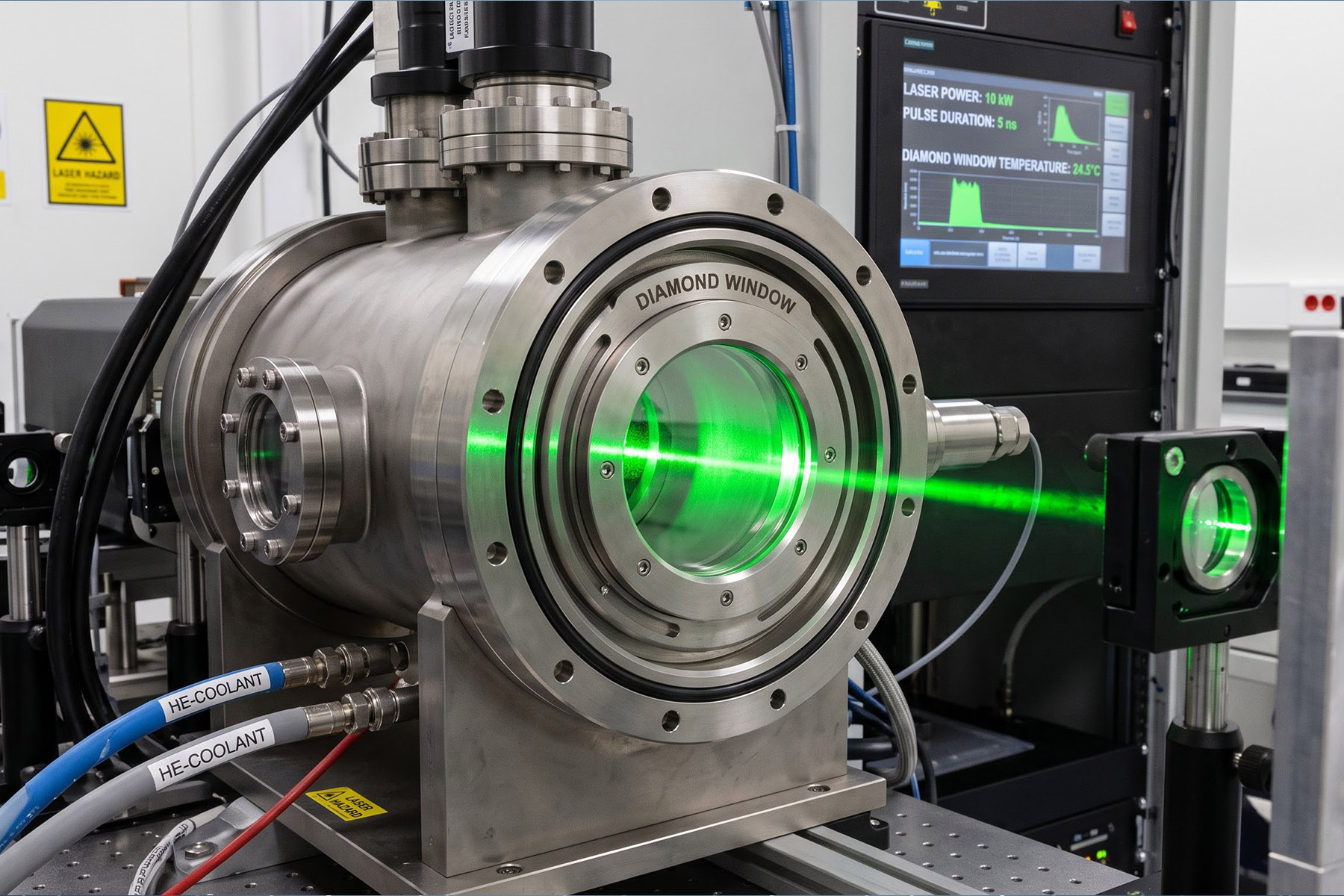
For any high-energy laser systems, the efficient working of every optical component is crucial. But the window can be one of the biggest challenges. Since there tends to be an increase in the laser power from hundreds of watts to megawatts, it is important that the optical window is capable of handling intense energy without consumption of too much heat. Overheating of the window can cause multiple issues including distortion of laser beam, reduction in performance and eventually failure.
Though traditional materials such as zinc selenide, sapphire and silicon work well at moderate levels, there comes a point where they have limitations when faced with extreme laser conditions. Here is where lab-grown diamond offers a promising solution. Properties of diamonds including high thermal conductivity, broad optical transmission, and excellent mechanical strength makes lab-grown diamonds perfectly suited for demanding high-energy laser systems.
In this blog, let us understand the key advantages of diamond windows, why diamond windows are ideal for high-energy laser machines and the various applications.
What are Diamond Windows?
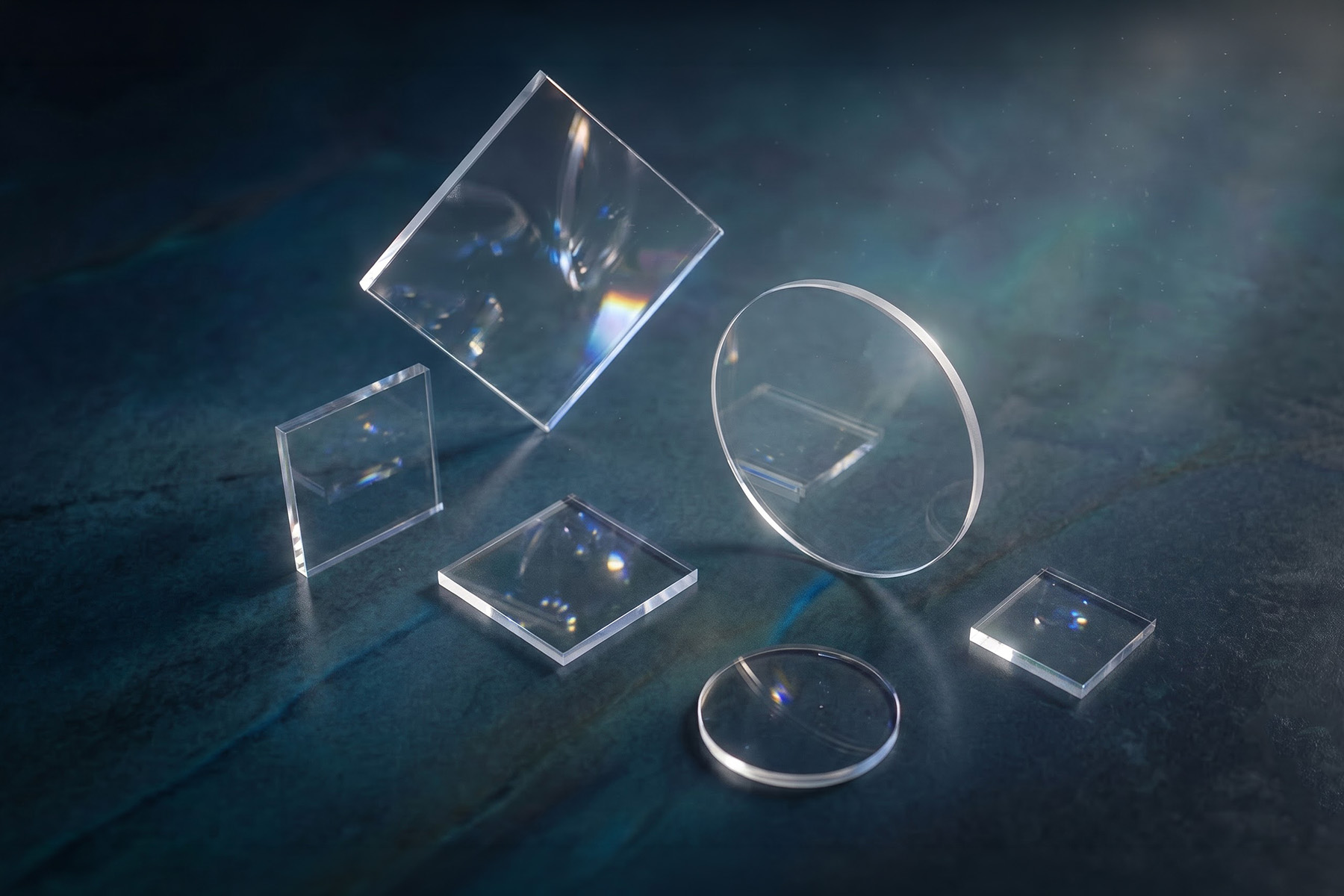
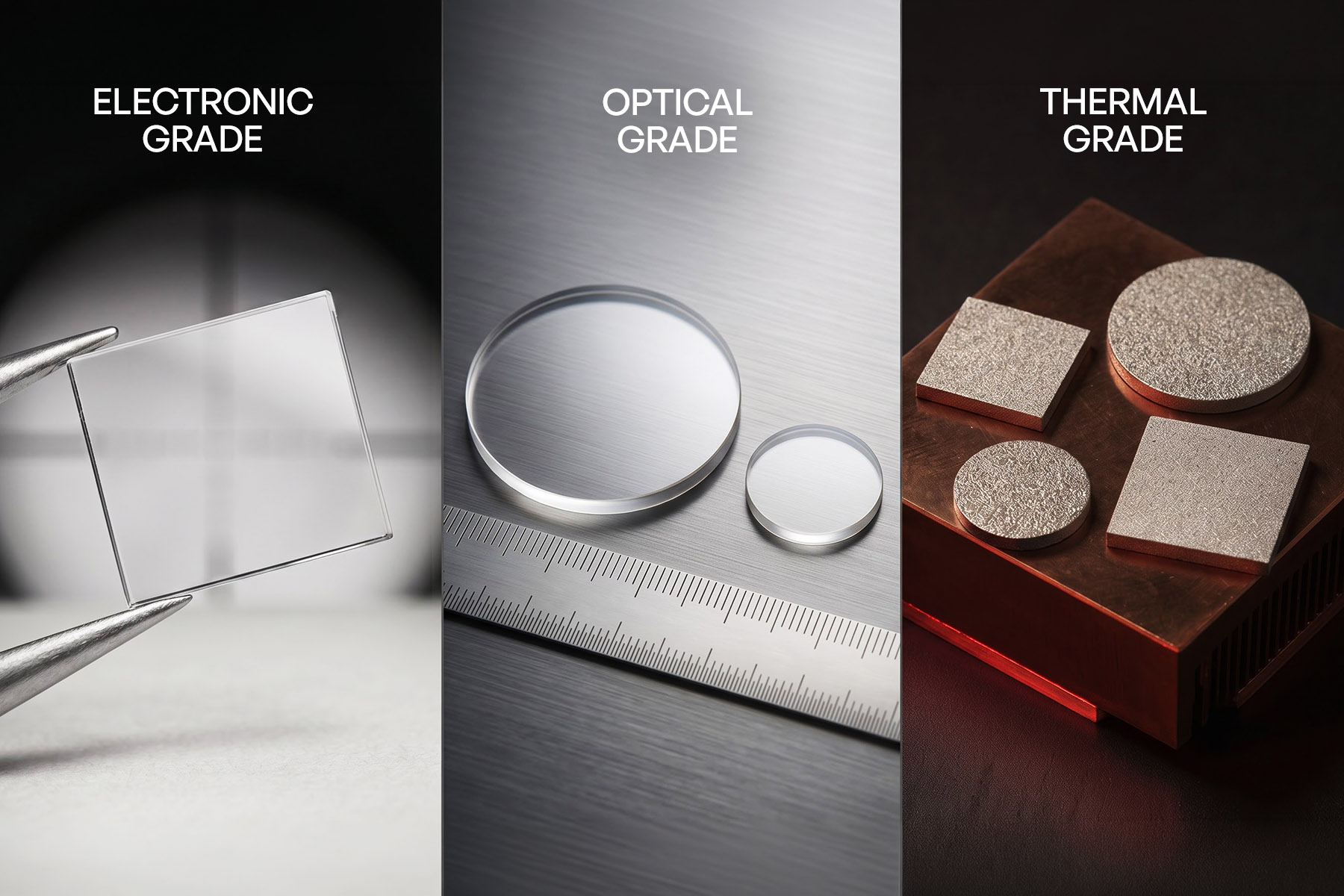
Diamond windows are thin freestanding films which work well as a transparent barrier in optical systems. These windows are developed via Microwave Plasma Chemical Vapor Deposition (MPCVD) growth process, which allows for precise control over the size and the quality, resulting in the production of uniform disks. Lab-grown diamonds carry multiple benefits including - high thermal conductivity, unmatched hardness, and a broad transmission spectrum.
The extreme hardness makes them resistant to scratches, while the high thermal conductivity enables rapid heat spreading during high-power laser operation. This allows them to perform efficiently even under extreme heat.
Limitations of Existing Window Materials
High-power laser systems have long relied on conventional materials including - zinc selenide, germanium, silica and sapphire. However, these materials do face physical limitations especially when exposed to thermal or mechanical stress. Let us understand the limitations of each of the materials and why replacing them with diamond will prove to be beneficial.
a. Zinc Selenide
Zinc Selenide (ZnSe) is commonly used as an optical material in moderate-power CO₂ lasers and in thermal imaging systems. However, the low thermal conductivity of ZnSe (18 W/m·K) becomes an obstacle in multiple applications. Exposing Zinc Selenide to high laser or heat loads causes the lens to heat up, change focus, and reduce optical performance.
Also, the low Knoop hardness of 110–120 kgf/mm², makes them prone to scratches, surface wear, and damage from particles. The result? Reduction in the optical quality and increase in the risk of laser damage.
b. Germanium
Germanium has proven to be highly valuable in long-wave infrared systems. This is because its high refractive index allows optical systems to be smaller and more compact. But the moderate thermal conductivity at 60 W/m·K) and a low bandgap of 0.803 eV limits its performance especially under high-power laser exposure.
Additionally, Germanium also has a thermo-optic coefficient which can cause the laser beam to lose focus and cause the material to severely damage.
d. Sapphire
Sapphire has remarkable hardness and strong mechanical strength which makes it suitable for applications where durability and pressure resistance is important. But the thermal conductivity of sapphire falls in the range of 27 to 35 W/m·K which is much lower when compared to lab-grown diamonds. This means it cannot drive away heat as effectively as lab-grown diamonds.
Furthermore, sapphire also has limited infrared performance where light transmission will drop significantly beyond 5 μm, making it unsuitable for long-wave infrared laser applications.
Benefits of Diamond Windows for High Energy Laser Machines
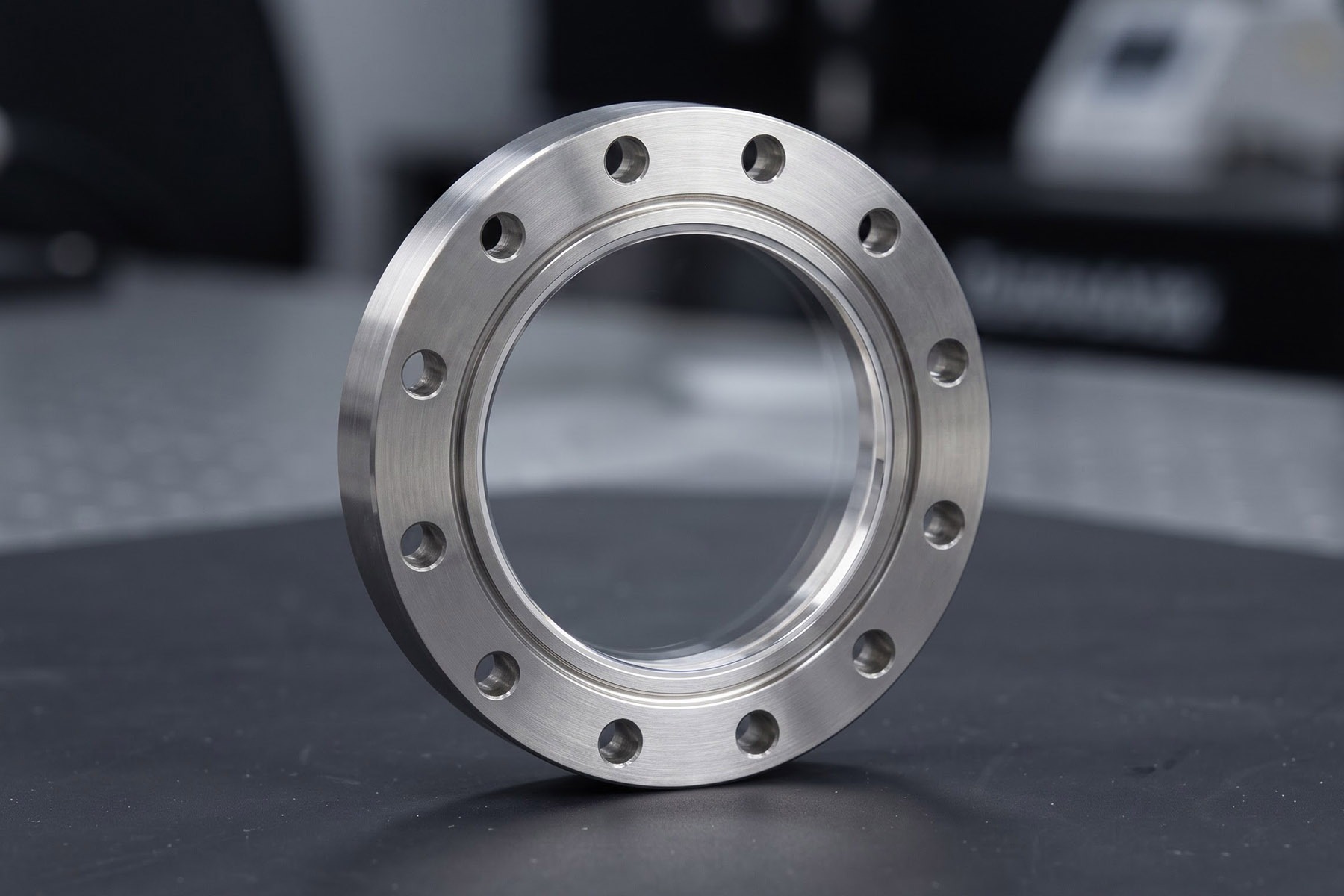
High-energy laser machines generate substantial heat and optical stress, making them an important material for beam quality and system reliability. When it comes to high-energy laser machines, there is no better material than diamonds. Diamonds have exceptional properties which makes them a valuable fit for high energy laser machines. CVD diamond windows offers several advantages:
1. Remarkable Thermal Conductivity
CVD diamonds showcase exceptional thermal conductivity in the range of 2000 W/m.K and 2500 W/m.K. This thermal conductivity is 5 times better than copper and 140 times higher than Zinc selenide. When it comes to diamonds, heat travels as vibrations, so the laser’s energy rapidly disperses to the surrounding cooling systems.
2. Resistance to Thermal Shock
High-power laser beams can lead to temperature changes within an optical window. The high thermal conductivity and low thermal expansion of diamonds makes it possible to withstand temperature changes without the risk of cracking or deformation.
3. Superior Durability in Harsh Conditions
CVD diamond windows are durable and showcase remarkable resistance to damage from harsh chemicals, radiation and extreme pressure. As compared to other conventional materials that tend to crack under harsh conditions, CVD diamond windows stay stable and retain their optical performance.
4. Unmatched Hardness
Diamond is the hardest known material which makes them offer high resistance to surface abrasion, micro-scratching and environmental erosion. Additionally, the chemical inertness of diamond offers long-term operational reliability when it comes to high-vacuum chambers, industrial cutting environments and defense-directed energy operational scenarios.
5. Resistance to Overheating
With a much wider bandgap than Germanium or ZnSe, diamond does not overheat at elevated temperatures. This makes it a safe option from the thermal runaway that damages other materials.
The Market for Diamond Windows
When it comes to advanced materials and optical component industries, CVD diamond windows hold a key role. Some of the applications for diamond windows include laser systems, high-power microwave devices, and scientific instrumentation. The market for diamond windows is projected to grow at an annual rate of 14.3% from the period of 2026 to 2033.
The key driver responsible for driving growth in this market is the exceptional properties of diamonds including optical transparency, thermal conductivity and mechanical robustness. As industries such as aerospace, defense, semiconductor manufacturing and scientific research are intensifying, there will be an increase in the need for advanced optical materials.
The acceleration in this market is driven by technological advancements in the CVD processes and adoption of high-end applications. Continuous innovation and improvement in the plasma-enhanced CVD techniques have brought a drastic improvement in the quality, uniformity and scalability.
Final Thoughts
To conclude, high-power laser systems require optical windows that can effectively withstand intense laser radiation, high thermal loads and demanding operating environments while leading to no compromise on the beam quality. The multiple properties of diamonds combined include high thermal conductivity, broad optical transmission, excellent mechanical and chemical stability.
The ability to withstand heat helps minimize thermal gradients, thermal lensing and deformation during high-power laser operation. While the extreme hardness of diamonds makes them scratch-resistant. As the laser power densities tend to increase, CVD diamond windows are offering a valuable solution for efficient and stable high-energy laser machines.
Frequently Asked Questions
Here are some interesting FAQs on CVD Diamond Windows:
“redefining one diamond layer at a time”
More Articles
%20vs%20(110)%20vs%20(111).jpg)


Aga9 Systems is a lab-grown diamond manufacturing company dedicated to harnessing the valuable properties of CVD diamonds for industrial applications. We at Aga9 Systems manufacture more than lab-grown diamond plates, we are dedicated to creating brilliance ethically, sustainably and with maximum resource efficiency.