
A Complete Guide to the MPCVD Diamond Growth Process

Lab-grown diamonds possess defining material properties which has made them perfect for multiple scientific and technological applications. Synthesized via two main techniques including: High Pressure High Temperature (HPHT) and Chemical Vapor Deposition (CVD), the superiority of MPCVD is now paving the way for a wide range of applications especially in jewelry, electronics and manufacturing.
MPCVD is a diamond growth technique that utilizes microwave energy to generate plasma. This process facilitates the growth of single crystal diamonds on a substrate. The extraordinary material properties of diamonds have made it perfect for multiple scientific and technological applications.
The microwave plasma machines at AGA9 Systems are equipped with the best state-of-the-art facilities and technology. In this blog, we will cover details on the manufacturing process of MPCVD, its advantages and applications in different industries.
What is Microwave Plasma Chemical Vapor Deposition (MPCVD)?
The traditional process of Microwave Plasma Chemical Vapor Deposition uses microwave energy for manufacturing extremely thin diamond plates of lab-grown diamonds. The best part about lab-grown diamonds lies in its ability to precisely create ultra-pure and controlled growth environments. This method helps get rid of common sources of contamination witnessed in other methods of diamond production.
This makes microwave plasma the gold standard for crafting high-purity lab-grown diamonds.
Traditional Process of MPCVD

Microwave Plasma Chemical Vapor Deposition is a technique which is more than applying coating. It involves crafting a material from scratch in the most pure and cleanest way possible. The process of MPCVD starts in a vacuum chamber where specific gases including methane and hydrogen are introduced.
The gases and stripping electrons from their atoms result in creating plasma that is a reactive cloud of ions and radicals. This plasma cloud works as the foundation of the desired material. For example in the case of diamonds it would be carbon atoms.
These reactive species are then layered onto a heated substrate which is often a small diamond seed crystal. All these species are placed in a highly ordered crystalline structure, effectively growing the new material.
The MPCVD Advantage Over Other Growth Processes
The generation of plasma is a defining factor for MPCVD. As compared to other methods of diamond growth, the chamber has no internal electrodes. The microwave field contains the plasma and prevents it from touching the chamber walls.
This contactless technique eliminates two main sources of contamination. One is the impurity arising from internal electrodes and the other is the contaminants from chamber walls.
There are four main fronts which make the MPCVD diamond growth process superior to other diamond growth techniques.
i. Purity Advantage
The process of Hot Filament CVD (HFCVD) applies the use of headed metal wire to break down the carbon gas. With time this filament degrades and expels metal atoms into the chamber. These atoms result in impurities and affect the optical properties of diamonds. On the other hand, the process of MPCVD does not have internal components that degrade which significantly results in purer diamond.
The result is a diamond of exceptional crystal quality - pure, consistent, and delivering performance you can count on every time.
ii. Stability Advantage
The DC Plasma Jet CVD method makes use of an electrical discharge between two electrodes for creating plasma. This results in inconsistent growth rates and affects the quality of the diamond's surface.
The process of MPCVD is capable of generating a large and stable plasma ball which is extremely essential for growing single-crystal diamonds without any defect/internal stress.
iii. Control Advantage
The Microwave Plasma Chemical Vapor Deposition (MPCVD) growth process ensures control over key variables including temperature, gas composition and pressure. Such level of control ensures that the properties of diamonds are precisely utilized for different industrial applications.
Such stability is required to ensure continuous deposition over long periods, ensuring consistent diamond quality across every batch.
iv. Single & Polycrystalline Growth
The MPCVD diamond growth process supports the manufacturing of both single crystal and polycrystalline diamonds. This characteristic makes it the most adaptable and commercially relevant diamond synthesis growth process.
Real-World Industrial Applications of MPCVD Diamonds
Many demanding industrial applications today are increasingly making lab-grown diamonds a valuable option. The following section highlights the use of MPCVD in different industrial applications:
a. Electronics and Semiconductors

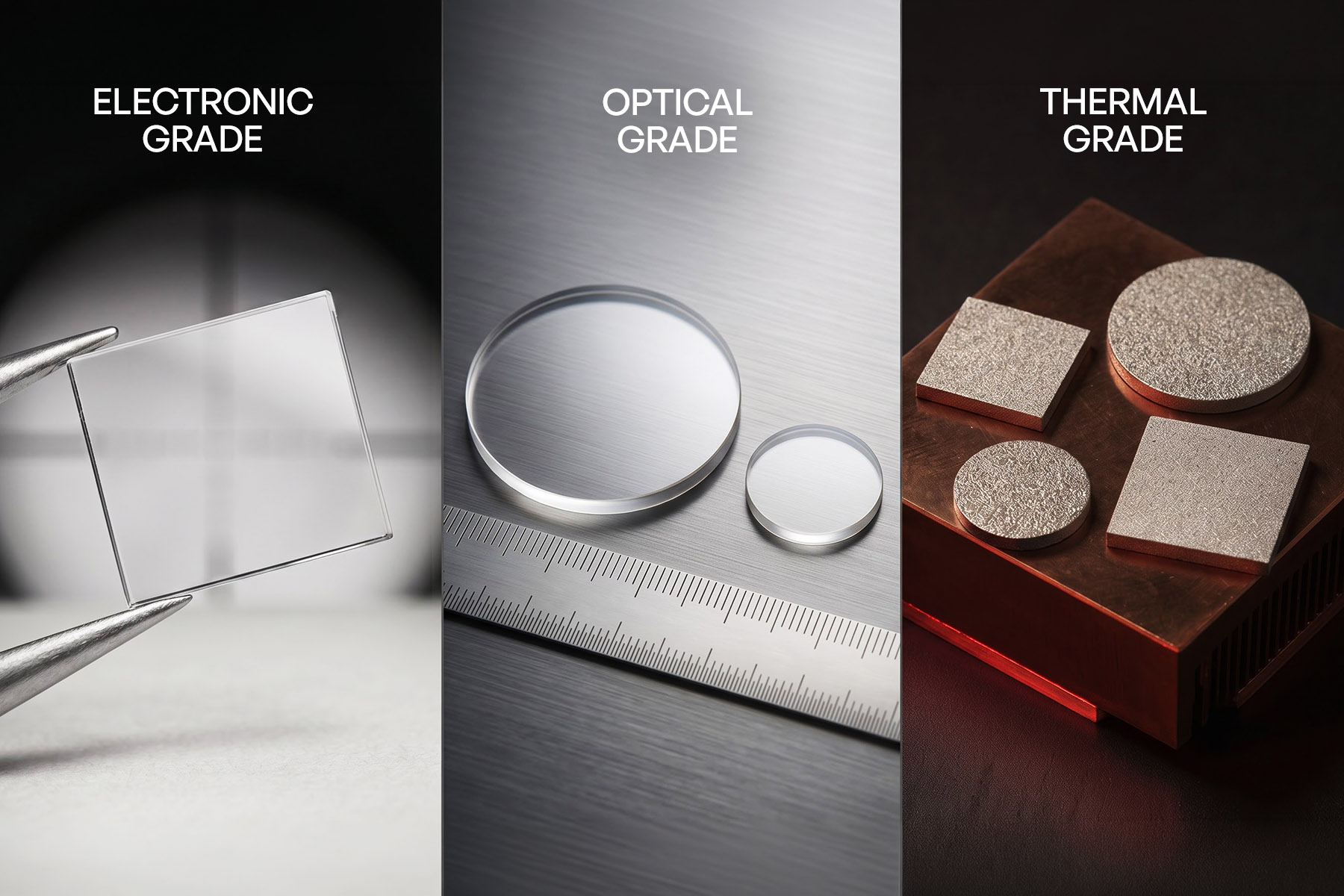
MPCVD-grown diamond plates have changed the entire game of electronic devices. The excellent thermal conductivity, good breakdown voltage and high carrier mobility are defining characteristics that make lab-grown diamonds a perfect fit for high-power and high-frequency devices.
A good example of this is RF amplifiers in satellite communications where the use of lab-grown diamond improves reliability and reduces cooling requirement. With diamond-based substrates, semiconductor devices will result in faster data transmission rates and excellent device efficiency.
Beyond power electronics, the high purity of MPCVD diamonds supports precise diode fabrication, while controlled NV center development opens exciting possibilities in quantum device fabrication. This makes lab-grown diamond one of the most versatile and forward-looking materials in modern electronics.
b. Quantum Computing Components

Diamonds synthesized in the lab with NV centers are instrumental in advancing quantum applications. The process of MPCVD ensures precise placement of NV centers within single-crystal diamonds known as qubits. The best part about these diamonds is their ability to enhance the sensitivity of quantum sensors used in medical imaging and navigation systems. The scalability and advancement in technology is placing demand for high-quality and defect-free diamonds hence the sudden growth in MPCVD diamonds.
c. Heat Management
High-power electronic devices tend to release a lot of heat while in operation. The use of lab-grown diamonds as heat spreaders effectively addresses the issue of heat in components such as laser diodes and high-speed processors. This helps prevent overheating and extends the lifespan of devices. This superior thermal conductivity of lab-grown diamonds is highly valuable in aerospace, automotive and consumer electronics sectors.
d. Optical and Laser Technologies
Lab-grown diamonds with superior purity have wide industrial applications in areas including optical windows, laser components and UV light sources. With MPCVD, it is possible to manufacture transparent and defect-free diamonds that have the ability to withstand intense laser radiation. Businesses dealing in aerospace and defense can leverage these qualities and result in durable and high-performance optical systems.
Key Benefits of MPCVD in Different Applications
1. Use in Semiconductors
Lab-grown diamond plates are being used as substrates in semiconductor devices. This makes them highly suitable for use in semiconductor applications. High-power chips tend to generate heat while in operation and here is how lab-grown diamond plates will help manage heat positively and effectively. This helps lower operating temperature and improve the reliability of devices.
2. Beneficial for Optical Windows
Synthetic diamond plates are proving to be valuable in optical element development. Lab-grown diamonds show optical transparency over a wide spectrum of electromagnetic rays ranging from 250 nm to 25 micrometers. It is the only material that shows transparency across this entire range.
This property makes diamond a suitable material choice for the development of optical windows in high-power lasers, X-ray systems, and synchrotrons.
3. Effective in Heat Management
Heat management is a major concern in electronic devices which can stall or affect the final performance output. By incorporating lab-grown diamond plates, heat management in devices can be better managed compared to traditional materials such as silicon, copper and silicon carbide.
The extreme thermal conductivity of lab-grown diamonds results in effective heat dissipation. This further extends the life of the devices and helps improve the final performance.
4. In Cutting Tools
Lab-grown diamond plates have an exceptional hardness level which sets them apart from conventional materials. The remarkable hardness makes them resistant to abrasion, a critical aspect for cutting tools. Some advantages of this growth process include a better tool life, fewer tool replacements and excellent cutting performance.
Conclusion
MPCVD diamond growth process is an effective and reliable way of growing both single-crystal and polycrystalline diamond plates. This process allows manufacturers to achieve outstanding control over the quality of the crystal and its uniformity.
The best part about MPCVD diamonds showcase superior purity and structural consistency. This makes them an excellent material for multiple industrial applications. Be it cutting-edge electronics to quantum technologies, the superior characteristics of lab-grown diamonds makes them highly valuable across numerous sectors.
The current shift to MPCVD lab-grown diamonds makes them a good fit for high-performance materials. These are designed to meet the ever increasing demands of today's demanding industrial applications.
Frequently Asked Questions
“redefining one diamond layer at a time”
More Articles



Aga9 Systems is a lab-grown diamond manufacturing company dedicated to harnessing the valuable properties of CVD diamonds for industrial applications. We at Aga9 Systems manufacture more than lab-grown diamond plates, we are dedicated to creating brilliance ethically, sustainably and with maximum resource efficiency.