
How is AI Transforming Lab-Grown Diamond Production
Diamonds, the hardest material on earth, are known to have exceptional properties which makes them an excellent fit for multiple industrial applications. From semiconductors used in electronics to components driving electric vehicles, diamonds have quietly underpinned the world's most critical technologies. However things are changing. Artificial intelligence has entered the picture and is making remarkable shifts in the diamond industry. It is set to improvise the lab-grown diamond manufacturing process.
The growth of AI is bringing a remarkable shift in the diamond industry and reshaping how diamonds are grown, refined and applied. In this blog, let us understand the lab-grown diamond manufacturing process and how AI can help benefit the production process of lab-grown diamonds.
Why is AI Gaining Momentum?
AI is gaining momentum and is slowly playing a key role in optimizing lab-grown diamond production. The traditional process of CVD involves layer by layer formation of diamonds in a controlled environment where even a slightest variation impacts the final result. AI can help address this as it can monitor conditions in real time by adjusting variables and improving consistency across batches. There are several factors that contribute to the growth of AI:
Impact of AI in Lab-Grown Diamond Production
Today the impact of AI on lab-grown diamond production is highly visible. Known to be a highly manual process, the introduction of AI is proving to be valuable in reshaping how lab-grown diamonds are created, analyzed and refined. In this section, let us understand how AI helps in the production of lab-grown diamonds:
Planning with AI
The production process of diamond formation begins as a rough stone - unrefined, uneven and unpolished. Traditionally, lab-grown diamonds are made via two growth processes -HPHT (High Pressure High Temperature) and CVD (Chemical Vapor Deposition). However, AI is making these processes efficient, accurate and highly scalable. So how is AI proving helpful in the diamond production process:
- Predictive Growth Conditions: AI algorithms have the ability to analyze and control temperature, pressure and chemical compositions. These parameters create ideal conditions for flawless diamond formation. With automated monitoring the need for energy consumption gets reduced leading to enhanced efficiency.
- Reduction of Defects: Detection of impurities becomes easy with AI-powered sensors. The real time identification of impurities and structural inconsistencies allows room for manufacturers to rectify defects during the growth stage rather than after the end of the production process.
Real-Time Monitoring
One of the most valuable contributions of AI is related to real-time plasma control. The plasma is an important aspect of the MPCVD diamond growth process hence it needs to be centered perfectly to ensure stable growth. AI can assist in monitoring the plasma growth in the following manner:
- Helps analyze the light emitted by the plasma
- Monitor how much energy is absorbed by the plasma vs how much is reflected in the generator
- Analyze the physical shape and position of the plasma ball
Quality Prediction
AI is capable of predicting the internal quality of the diamond. Artificial Intelligence accurately analyzes the growth patterns and sensor data during the initial few hours of the cycle. This data helps determine the probability of developing inclusions or structural defects.
If the AI predicts a low-quality outcome, the manufacturer can choose to terminate the cycle early, saving weeks of energy and gas. Alternatively, if AI detects a "flawless" growth trajectory, the cycle can be extended till the final outcome arrives.
Predictive Maintenance of Reactors
AI also helps with the predictive maintenance of reactors. AI can flag potential failures before they occur including monitoring reactor performance and temperature fluctuations. The analysis will help manufacturers schedule maintenance, avoid downtime and disruptions to the growth cycle. All together these AI-driven capabilities will result in reduced energy consumption and enhanced diamond production.
Market Impact
The adoption of artificial intelligence is set to bring a turning point in the lab-grown diamond industry. As synthesis techniques improve and production scales, the market is undergoing a structural shift that will redefine the value of diamonds in both the jewelry and industrial sectors.
The most significant change in the diamond industry is the "identity shift" from a luxury gemstone to a critical industrial material. Today diamonds are widely being regarded as the ultimate thermal management solution for high-power electronics and AI data centers.
AI chips are pushing thermal limits, often operating in the 700 - 1,000 W range. Traditional copper cooling, with a thermal conductivity of ~400 W/m·K, is struggling to keep up. Aga9 Systems CVD diamond plates, with a thermal conductivity in the range of 1200 to 2,000 W/m·K provides a viable solution that can reduce the temperature of the chip by over 50°C.
Thermal Conductivity: Diamond vs. Traditional Materials
Furthermore, the elimination of hotspots due to diamond substrates allow chips to compute up to ten times faster while significantly extending their operational lifespan. AI-driven materials design is the primary tool allowing for the miniaturization of these laboratory-grade setups into portable, robust devices.
Future Outlook

AI is the enabling technology that will allow diamonds to move from the jewelry box into the heart of the next generation of supercomputers:
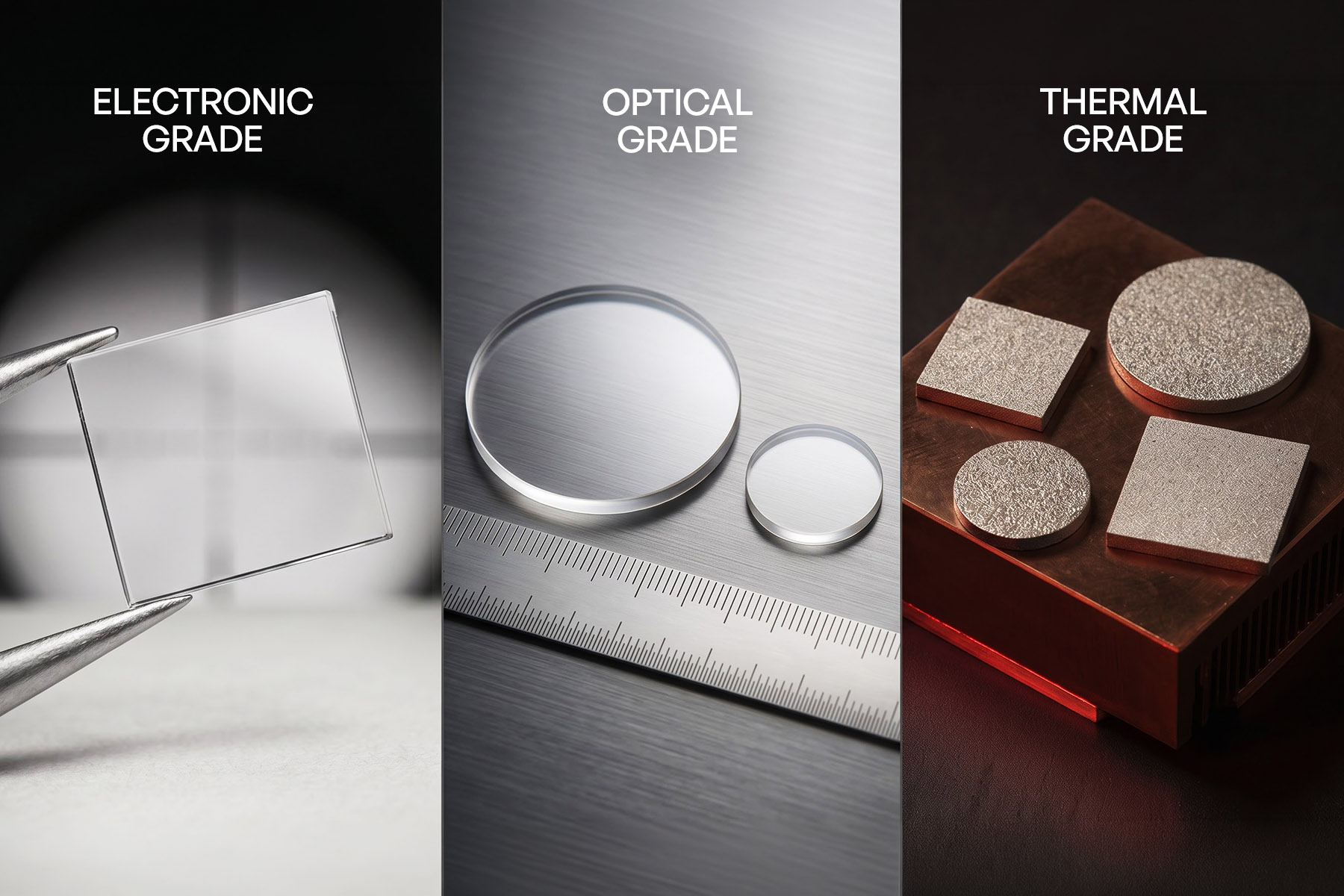
- Diamond Based Semiconductors: Diamonds have a thermal conductivity which is nearly 10 times that of silicon, making them the ultimate material for heat sinks in 5G infrastructure and electric vehicle (EV) power systems. However, these applications require "electronic grade" diamonds with almost zero impurities or lattice defects. AI-driven synthesis can be crucial technology to achieve the extreme levels of purity required for these applications.
- Quantum Applications: Lab-grown diamonds with Nitrogen Vacancy (NV) center defects are being manufactured for quantum sensors and computing. This is possible through the precise placement of inclusions, a task revolutionized with the help of AI. AI models predict how specific atomic-level modifications will affect the diamond's quantum properties, allowing for the rapid prototyping of new diamond-based technologies.
Key Takeaways
To conclude, AI is slowly and steadily making an impact in the lab-grown diamond production process. Artificial intelligence has the potential to transform a sensitive and multi-variable complex chemical process into a precise and data-driven manufacturing process. AI can help in every stage - starting with plasma stability, gas flow optimization, and quality inspection, all the way through to application development.
As we move forward the relationship between AI and diamonds is set to deepen. For the technology industry, this would mean removal of thermal bottlenecks that might be threatening the slow pace of innovation.
Frequently Asked Questions
Here are some interesting FAQs on the Role of AI in Lab-Grown Diamond Production:
“redefining one diamond layer at a time”
More Articles
%20vs%20(110)%20vs%20(111).jpg)


Aga9 Systems is a lab-grown diamond manufacturing company dedicated to harnessing the valuable properties of CVD diamonds for industrial applications. We at Aga9 Systems manufacture more than lab-grown diamond plates, we are dedicated to creating brilliance ethically, sustainably and with maximum resource efficiency.