
Lab-Grown Diamond Plates For EV Battery Thermal Management

Introduction
As we are moving towards sustainable and greener technology, an increasing number of consumers are now opting for electric vehicles (EVs). The growth in EVs also provides a better understanding of battery overheating challenges. Key factors contributing to battery performance issues include inefficient battery thermal management systems (BTMS) and power electronics (PE) devices within EVs.
Poor performance of the BTMS and PE systems lead to slow battery charging, rise in the battery temperature, and reduced battery life. In recent years, lab-grown diamonds (LGDs) have been identified as a potential semiconducting material for developing efficient quantum sensors for BTMS and heat spreaders for PE devices.
This blog will elucidate how the unique thermal properties of lab-grown diamonds can be effectively utilized in advanced EV systems.
Role of BTMS and PE Devices in EV Battery Performance
The performance of the EVs relies upon efficient charging and discharging of the batteries at their intended working temperature ranges. The battery charging and discharging effectively relies upon the sensors included in the BTMS and the power electronic devices’ efficiencies.
The BTMS maintains the optimal operating temperature of EV batteries by sensing the following aspects:
- Battery temperature
- Charging and discharging currents
- The electromagnetic fields of the batteries
- Associated electronic components
Based on the combined inputs of these sensors, the BTMS maintains battery performance by keeping current regulation, temperature, and lifespan in check. Therefore, any underperforming sensor within the BTMS could lead to degraded battery output.
Additionally, power electronic devices such as inverters, transformers, and current regulators often perform poorly due to inadequate heat dissipation to the heat sinks.
Currently, silicon and silicon oxide-based heat spreaders are used in the development of such power electronic devices. However, these materials are limited by their low thermal conductivity, leading to heat concentration, slow battery charging, sudden rises in temperature, and reduced battery lifespan.
Why Do Electric Vehicle (EV) Batteries Require Thermal Management?
It is a known fact that batteries perform in their best capacity when they are not exposed to extreme temperatures. EV batteries operating between 70 and 100 degrees Celsius are at a risk of thermal runaway. Thermal runaway is the state where the battery reaches at an incredibly high temperature increasing the chances of resulting in smoke.
These factors highlight why thermal management is essential in EV batteries. Without such a thermal management system, EV batteries might degrade, and in extreme cases, also result in catastrophic failure.
Challenges In EV Battery Thermal Management

Electric vehicle (EV) batteries face significant challenges when it comes to heat management. It is important to maintain an optimal temperature of batteries to ensure that the batteries do not overheat and perform at their optimal level. There are many challenges associated with managing EV batteries. In this segment, let us understand this in a bit more detail:
a. Extreme Temperatures
If the operating temperature exceeds above 40 degrees C it can cause irreversible damage. If the temperature is between 70 degrees C and 100 degrees C, it can lead to thermal runaways and result in fire and explosion.
On the other hand, if the temperature falls below quite low at 0 degree C it causes low power output and damages the battery while charging.
b. Uneven Temperature Distribution
The continuous variability in temperature can be one of the reasons for inconsistent performance and accelerated aging. This issue worsens during high-power charging and discharging cycles where some cells overheat while others remain cold.
c. Risks of Thermal Runaway
Thermal runaway is a significant safety concern especially when it comes to high-performance applications. It has the tendency to start a chain reaction which damages the affected cell and also the neighbouring cells putting at risk the entire battery pack.
d. Leakage Risks
Leaking is possible only in situations where pipe connections have risk of leakage. If the problem of leakage persists, it can hamper the battery performance and its life. In extreme cases, it can also lead to stalling the operation of EV batteries if humidity is present in the battery's electrical insulation.
e. Battery Charging Current Fluctuations
When it comes to electric vehicles (EVs), it is important to ensure smooth and efficient battery charging. An emerging challenge associated with EV battery thermal management is the current fluctuations during battery charging. The current fluctuations while battery charging results in sudden rise and drop of the amount of current flowing to the battery.
f. Sensor Failure in BTMS
The poorly placed sensors can lead to inaccurate readings and mislead the control unit. This will result in delayed response to thermal changes. Furthermore, low-quality components, especially sensors, increase the risk and affect BTMS's ability to maintain temperature. Hence, we should not rely on a single critical component since it is a risk if that component fails.
g. Power Electronics Component Failure
Power electronics play a critical role in electric vehicles. Its main purpose is to deliver and control electrical energy from the battery to the propulsion unit. The efficient and safe charging of electric vehicle batteries is a critical factor in the design and operation of EVs. This is dependent on the power electronics system which offers controls, converts and manages electrical energy during the charging process.
The Lab-Grown Diamond Plate Advantage

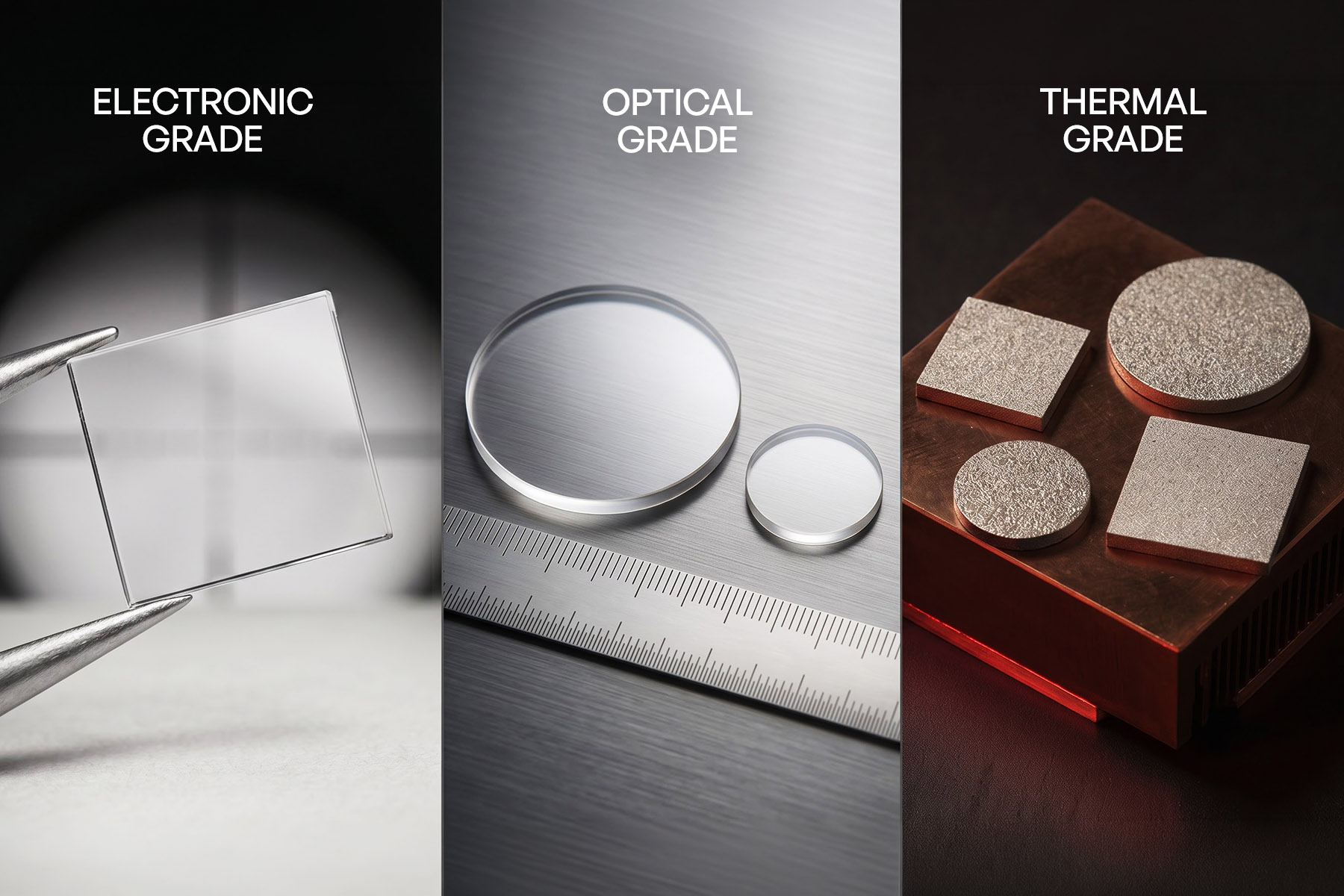
Diamond has the highest thermal conductivity, exceptional mechanical strength, and properties such as chemical inertness. With the advent of lab-grown diamonds (LGDs), it became possible to tailor the electronic properties of diamond. It is now possible to create the desired density of nitrogen-vacancy (NV) centers, which can be used to develop diamond-based quantum sensors.
These sensors can be used for magnetometry, precisely measuring tiny magnetic field changes within a BTMS during the charging and discharging of EV batteries. Researchers around the globe are focusing on optimising the NV center density in diamond plates, their coherence time, and fluorescence efficiency. These are the factors governing diamond-based quantum magnetometers.
Diamond plates can also be utilised as heat spreaders in developing key semiconducting components of PE devices to eliminate heat concentration issues. The integration of these plates results in faster heat dissipation from semiconducting devices to heat sinks, ensuring faster battery charging and more efficient overall EV performance.
Key Takeaways
In conclusion, Aga9 Systems lab-grown diamond plates can effectively manage heat in EV batteries. The growth in EVs is increasing and a common problem faced by them is the heating and charging issues in batteries. Hence, using diamond-based semiconductors will address these issues and solve them effectively.
Looking at the growth in EV batteries, it is crucial to manage heat and current more efficiently. Supercharging tends to generate significantly more heat. Moreover, the increasing energy density of batteries concentrates more heat within a smaller space. This underscores the growing importance of adequate thermal management.
As the demand for sustainable transport is said to increase in the near future there is going to be a growing need to develop efficient batteries. For long-term success of electric vehicles, it is important to have an effective battery thermal management system in place.
Frequently Asked Questions
“redefining one diamond layer at a time”
More Articles
%20vs%20(110)%20vs%20(111).jpg)



Aga9 Systems is a lab-grown diamond manufacturing company dedicated to harnessing the valuable properties of CVD diamonds for industrial applications. We at Aga9 Systems manufacture more than lab-grown diamond plates, we are dedicated to creating brilliance ethically, sustainably and with maximum resource efficiency.