
The Key Difference Between HPHT, CVD and Natural Diamonds
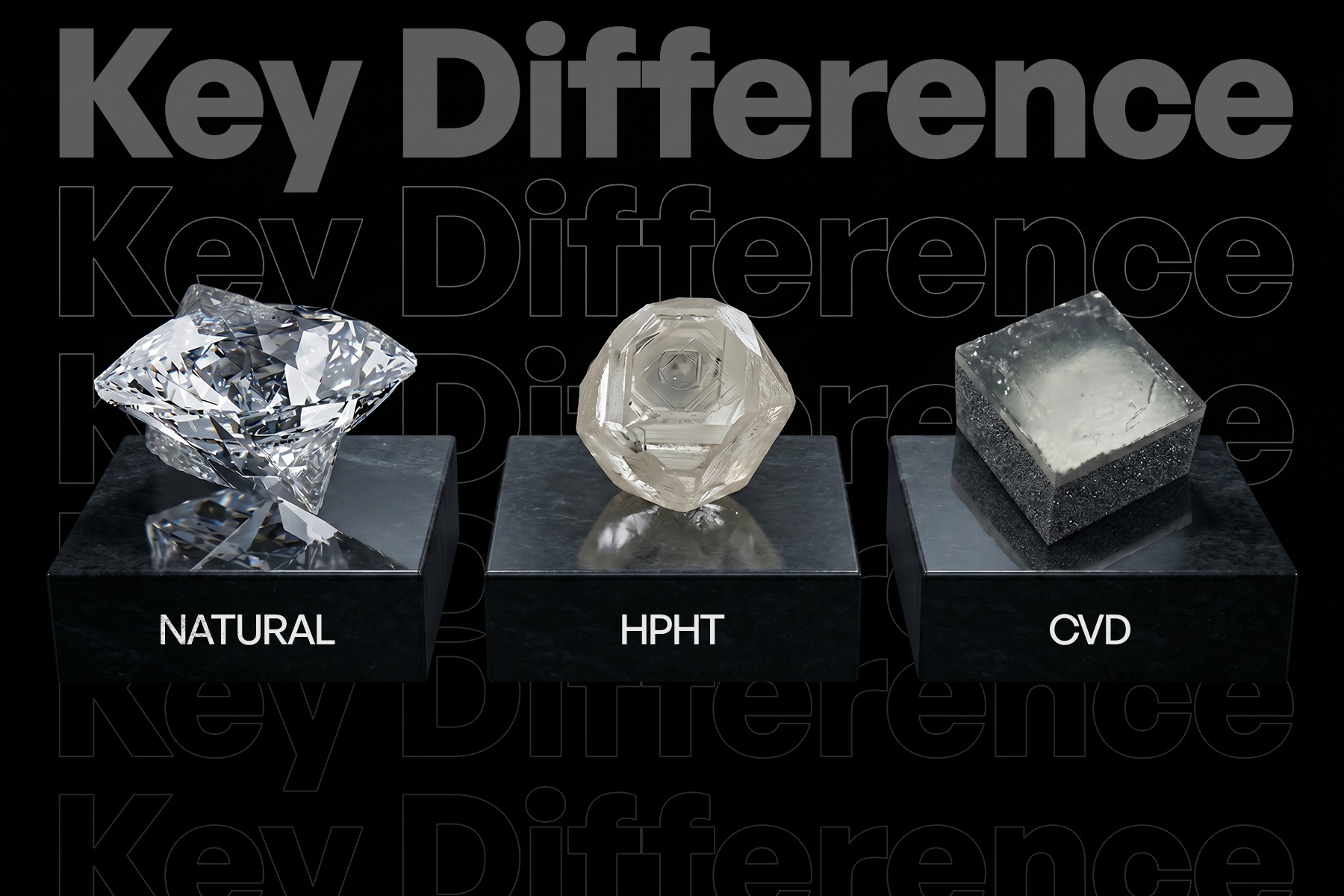
There has been an increasing traction in the discussion surrounding natural and lab-grown diamonds. Today diamonds are no longer limited to those created deep within the earth’s mantle. With advancements in technology, scientists can now replicate and refine nature’s processes in controlled environments, giving rise to the popularity of synthetic diamonds - High Pressure High Temperature (HPHT) and Chemical Vapor Deposition (CVD).
In this blog, we will pull back the curtain on these sophisticated processes to explore the distinct characteristics of HPHT, CVD, and natural diamonds. This will provide you with insightful information on each of these different diamond growth processes and how they differ from one another.
About HPHT Diamonds
The High Pressure High Temperature (HPHT) method is the most established technique to grow lab-grown diamonds. This method mimics the conditions under which natural diamonds form deep within the earth's mantle.
The process of growing HPHT diamonds starts by placing a small diamond seed in a high-pressure chamber alongside a carbon source, typically graphite. This is further subject to intense pressure and heat where carbon atoms are crystallized and a diamond is formed.
Stages of HPHT Growth Process
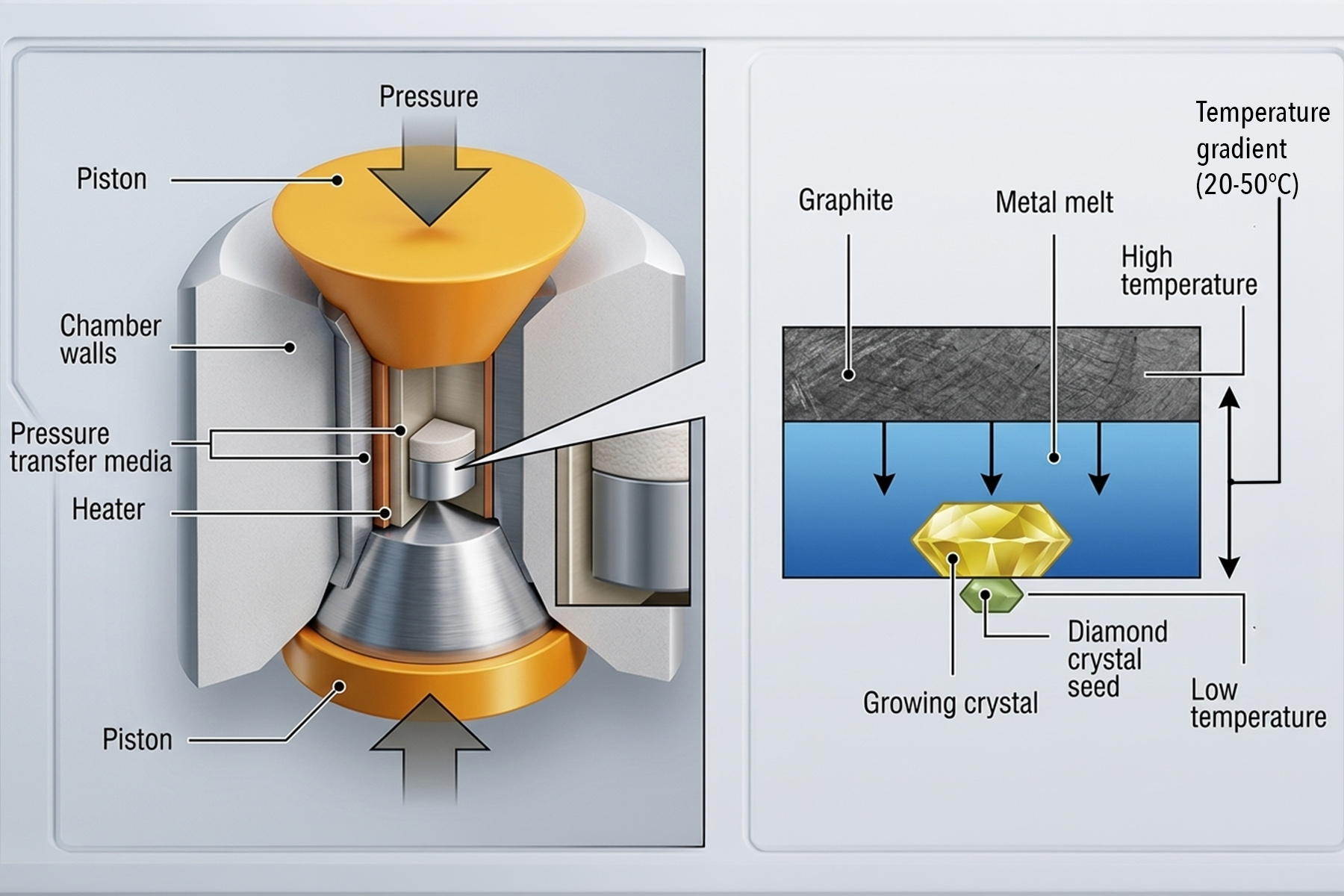
The HPHT diamond growth process has three main stages: preparation, growth and cooling. Let us understand each of these stages in this section below:
- Preparation: In this stage, a high-quality diamond seed is carefully selected and placed inside the growth cell. Alongside the seed, a carbon source is used which is typically graphite. A metal catalyst, typically a blend of iron, nickel, or cobalt, is also added to the growth cell.
- Growth: Once the preparation process is all set, the further process is subject to extreme conditions of heat and pressure. The pressure range is usually between 5 to 6 GPa whereas the temperature range is between 1300 degrees C to 1600 degrees C. These extreme conditions melt the metal catalyst and dissolve the graphite. These necessary growth conditions help convert carbon into a diamond around the seed.
- Cooling: The cooling stage is important as this is where, after the diamond is formed, it is allowed to cool down until the crystal structure is stabilized. This stage is critical as it helps preserve the diamond's structural integrity.
About CVD Diamonds
The Chemical Vapor Deposition (CVD) process is an advanced diamond growth process that offers a high level of control over the quality and characteristics of the diamond produced. As compared to HPHT diamonds, these allow for slower formation of the diamond, leading to higher clarity and fewer imperfections.
Stages of CVD Growth Process

a. Setting the Chamber
The CVD process begins with setting up a sealed vacuum chamber. Inside the chamber a small diamond seed is placed which acts as a foundation for the diamond to grow. Prior to placing the seeds, they are cleaned by following acidic and organic cleaning protocols. Then the reactor gets evacuated which helps in eliminating the contaminants and keeps the growth process clean.
This is a crucial step since even the slightest impurity can lead to major imperfections in the final diamond.
b. Gas Introduction
As the chamber is prepared, carbon-rich gases such as methane and hydrogen are introduced. Methane is the source of carbon atoms, while hydrogen provides the bonding sites for the carbon atoms and eliminates non-diamond phases.
c. Plasma Formation
Once the gases are introduced, they come into contact with high-energy microwaves (6 kW to 15 kW) and get ionized. This ionized gas also known as plasma includes carbon free radicals, carbon atoms and hydrogen atoms. Together these participate in diamond growth through a chain of chemical reactions at the surface of the diamond seeds. The operating pressure during this stage remains in the range of 100–200 Torr whereas the temperature during this stage is maintained in the range of 900°C to 1100°C.
d. Diamond Growth
In the diamond growth phase as the carbon atoms from the plasma start to settle down onto the diamond seed, they form in a diamond lattice structure. This is a slow growth process which might take days or even weeks to produce a diamond of the required size.
CVD is a slow and controlled diamond growth process wherein the diamond grows in even layers leading to a more uniform and pure diamond crystal.
Natural Diamonds
Natural diamonds are remarkable gemstones that are formed deep within the earth's mantle. They require extreme heat and pressure for production. The process of growing natural diamonds takes over billions of years requiring extreme heat and pressure. These diamonds are brought to the surface by volcanic eruptions and mining.
Formation of Natural Diamonds
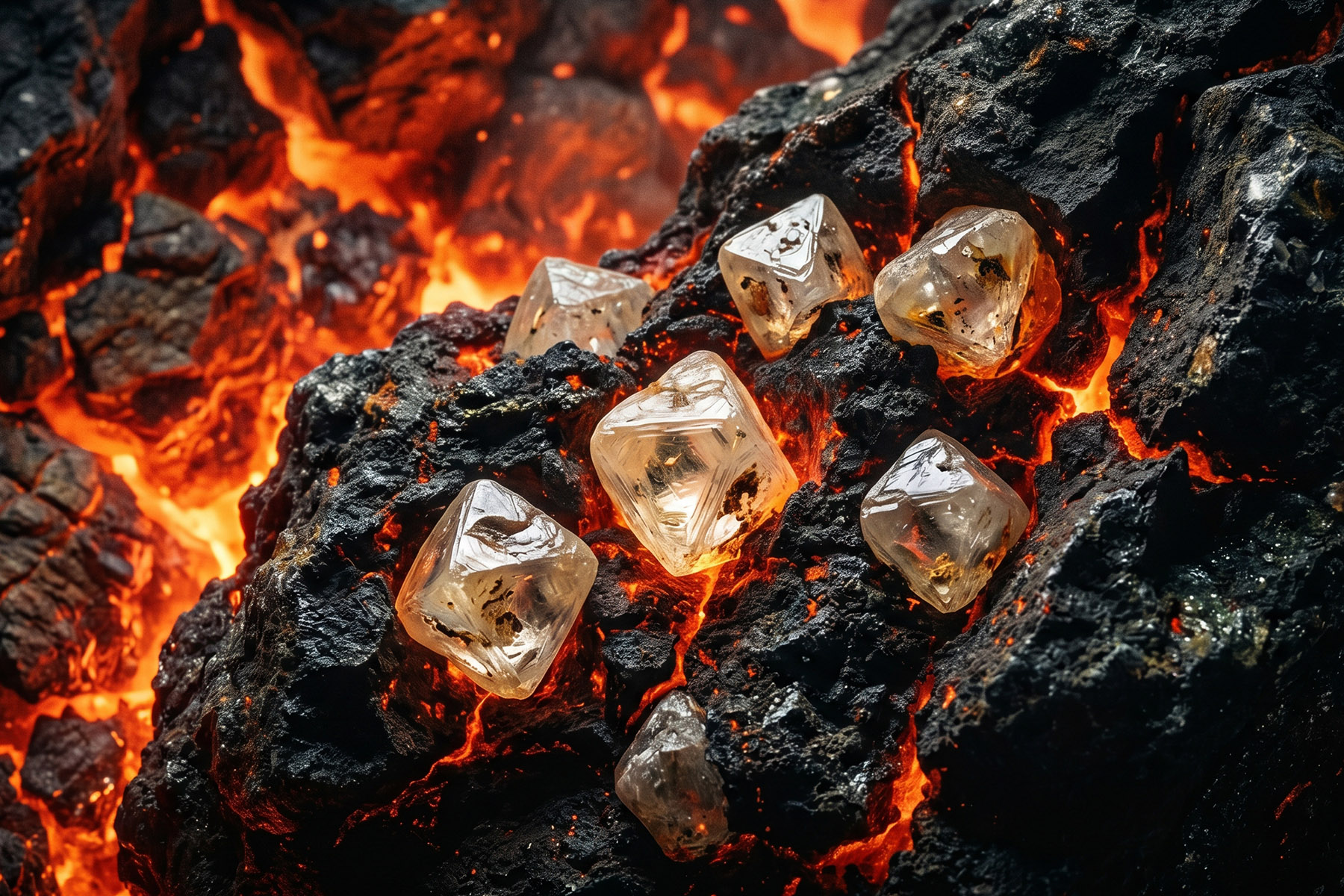
Produced under extreme conditions of heat and pressure, the sparkle of a diamond does not come easily. This is what makes natural diamonds stand out.
The Earth is made up of three layers - the crust, the mantle and the core. Natural diamonds are formed deep within the earth's mantle. They are formed about 140 to 200 kilometers beneath the surface with temperature exceeding 2,200 F and pressure up to 6 gigapascals. These conditions bond the carbon atoms together and crystallize into the structure we know as diamond.
Trace elements and minerals also influence the size, color and clarity of natural diamonds. Hence, no two natural diamonds appear to be similar. Once the diamond is formed, it however remains trapped deep underground. The diamonds are brought to the surface via volcanic eruptions.
During these events, the magma surges upward from around 160 kilometers below the ground carrying diamonds along with it. Once the magma cools, it leads to the formation of vertical pipe-shaped structures known as kimberlite pipes. Kimberlite pipes are one of the ways how diamonds make their way to the surface of the earth.
Environmental Considerations
When it comes to environmental footprint, lab-grown diamonds offer an advantage over natural diamonds. The process of producing natural diamonds involves extracting diamonds from the earth, requiring massive amounts of soil, deforestation and excessive water and energy. Comparatively CVD and HPHT diamonds are grown in controlled laboratory environments making them energy-efficient and reducing use of resources.
Today the diamond industry is increasingly adopting sustainable practices for growing diamonds. Diamond manufacturers are utilizing renewable energy sources for production and choosing to reduce carbon footprint.
Wrapping Up
The advancement in technology is pushing the boundaries of what lab-grown diamond plates can achieve. Looking at the growing demand of lab-grown diamonds across industries, they are increasingly becoming the go-to material choice for precision manufacturing applications.
The growth process of diamond has a direct influence on the quality and performance of the final product. CVD Diamonds bring in their exceptional purity and layer-by-layer growth control. This process is ideal for manufacturing diamond plates having superior surface uniformity.
At AGA9 Systems, we harness the best of what lab-grown diamond technology has to offer. Unlike natural diamonds, which are subject to the unpredictability of geological formation, lab-grown diamonds give us precise control over every aspect of the growth process.
This translates directly into diamond plates that deliver reliable, uniform and efficient performance in the most demanding industrial applications.
Frequently Asked Questions
“redefining one diamond layer at a time”
More Articles
%20vs%20(110)%20vs%20(111).jpg)
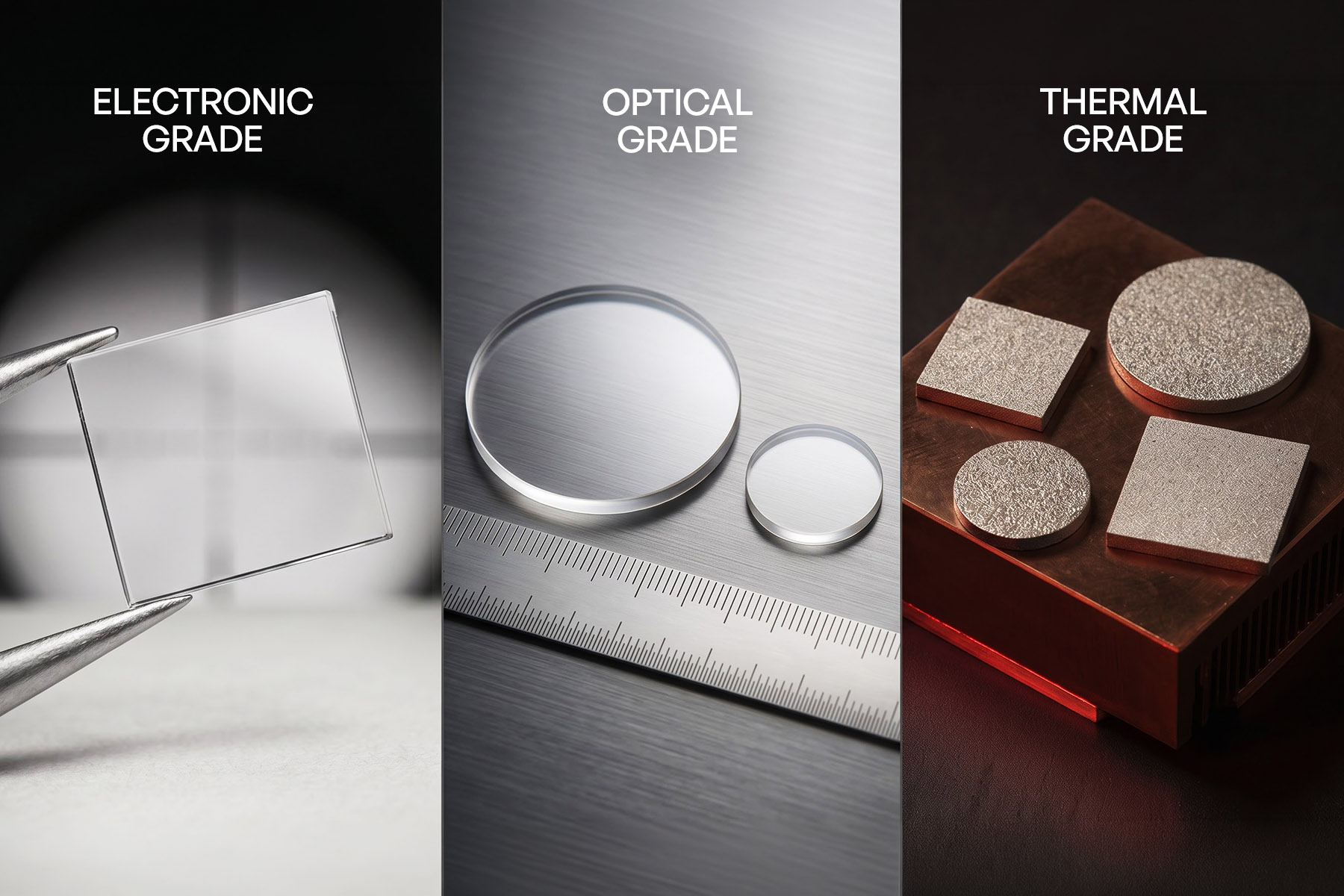


Aga9 Systems is a lab-grown diamond manufacturing company dedicated to harnessing the valuable properties of CVD diamonds for industrial applications. We at Aga9 Systems manufacture more than lab-grown diamond plates, we are dedicated to creating brilliance ethically, sustainably and with maximum resource efficiency.