
Lab Diamonds For Cutting And Drilling Tools

The ability to control the dimensionality, optical, mechanical and thermal properties, poses lab-grown diamonds as an opportunity in developing industrial machining tool fabrication. Diamond coatings or thick diamond films are implemented in a variety of industries, ranging from automotive to woodworking to heavy engineering. Thick-film diamond coatings provide superior wear resistance compared to thin coatings. The anisotropic mechanical properties of single-crystal diamonds help improve the performance of lab-grown diamonds.
We at AGA9 Systems craft lab-grown diamonds using the CVD method, which are designed to meet the ever-growing demands of cutting, drilling and grinding tools. In this blog, let us discover how lab-grown diamonds improve durability in cutting and drilling tools.
Enhance Industrial Tool Performance with Lab-Grown Diamonds
Tools equipped with CVD diamond coatings or thick film blocks demonstrate significantly extended service life and improved surface finish of machined parts owing to the diamond’s material properties. Moreover, at large-scale industrial use, lab-grown diamond tools offer cost advantages over conventional tooling, while supporting more sustainable manufacturing practices. Mechanically rated CVD diamonds are widely used as tools in cutting and drilling systems.
Applications of LGDs in Industrial Cutting and Drilling
Today many demanding industries are shifting their focus on lab-grown diamonds. In this part of the article let us understand the varied applications in industrial cutting and drilling where lab-grown diamonds can be integrated.

1. Diamond Cutting Tools
Tools made using diamond material are efficient and highly durable. The properties of lab-grown diamonds make them a perfect fit for cutting tools. Polycrystalline diamond plates are ideal for constructing hard metals such as titanium and tungsten carbide. These are also valuable for precise cutting of gemstones. However, there’s more! Tools having diamond coatings tend to effortlessly cut through extremely hard materials such as concrete, granite, and marble.
Lab-grown diamonds have a lot of advantages, such as excellent cutting efficiency, supreme hardness, high durability, and cost-effectiveness.
2. Drilling Applications
When it comes to mechanical machining it is extremely important that the materials have a sharp edge and wear resistance. Lab-grown diamonds have proven their usefulness in drilling applications as well. The durability and cutting efficiency of lab-grown diamonds leads to considerable reduction in drilling time and overall costs.
Lab-grown diamonds are ideally seen in applications such as diamond-tipped saws, drills and abrasives.
Diamond coatings made via Chemical Vapor Deposition process tend to improve wear resistance when machining carbide and composite materials. With lab-grown diamonds, tools last longer and perform better compared to other materials. The durability of lab-grown diamonds result in less downtime and fewer replacements in manufacturing and construction industries.
In addition, diamond-coated drills significantly improve tool life, particularly when machining difficult materials such as carbon fibre-reinforced polymers (CFRP). Diamond’s high thermal conductivity helps minimize edge rounding wear (ERW) caused by heat generation, reducing overall tool degradation.
3. High Precision Machining
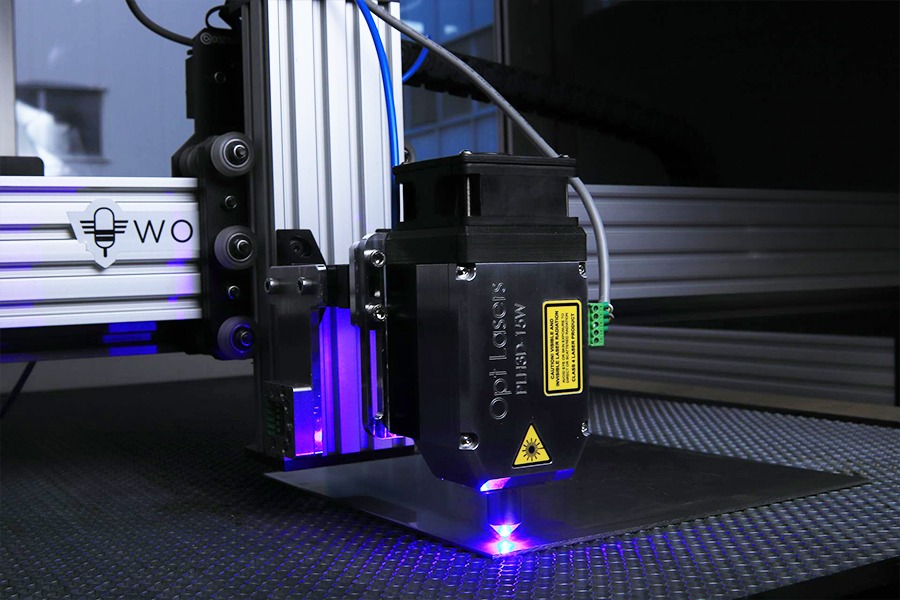
High precision machining demands tools that carry the ability to create extremely smooth surfaces. Single crystal diamonds are often used for manufacturing optics and semiconductor wafers. Minor defects can be an issue especially when it comes to delicate materials.
Lab-grown diamond based tools deliver the right level of precision that makes them the preferred option in applications where accuracy cannot be compromised.
4. Wear Resistant Materials
Lab-grown diamonds also find a valuable space in various components that are used in abrasive conditions. These diamonds take the form of diamond bearings, seals and valve components. Components made using lab-grown diamonds have an excellent capacity to withstand wear and tear. This property of lab-grown diamonds increases the lifespan of tools and helps enhance the reliability of cutting equipment.
5. Ophthalmic Surgical Knife

Stainless steel and silicon are extensively used in making surgical blades. The edge radius of stainless steel is much larger compared to diamond blades (~300 nm) owing to its crystalline structure. The disadvantage of this is seen in poor cutting performance and longer healing times.
In addition stainless steel is not durable enough to sustain its cutting edge over multiple uses. Silicon blades have smaller edge radii (~40 nm) however they still fail to perform over multiple incisions. Ophthalmic surgery requires extreme medical precision with complete focus and skill to operate on the eye.
Every incision and every movement of the operation must be executed with absolute perfection. Diamond is often used to make surgical knives, especially for delicate operations involving ophthalmic surgical knives.
This is because diamond is extremely hard and can be made into very sharp blades, which helps surgeons make precise cuts.
6. Turning
Diamond-coated inserts used for turning significantly increase tool longevity—by up to 3–5 times compared to uncoated inserts. Tungsten carbide–cobalt tools used for machining steel and metal matrix composites show notably reduced wear when coated with even thin diamond films (as little as 30 μm).
7. Milling
Milling cutters with multiple cutting edges benefit greatly from diamond coatings or brazed thick diamond films. These tools excel in machining oxygen-free copper, titanium alloys, magnesium alloys, and aluminum alloys. In terms of surface finish, diamond-based tools outperform advanced cemented carbide cutters.
In precision micro-milling, single-crystal CVD diamond with a {110} rake face has demonstrated superior cutting performance over {100} crystal orientations.
Benefits of Lab-Grown Diamonds For Cutting Tools
The unique properties of lab-grown diamonds makes them an effective and economical choice for cutting and drilling tools.
Better Cutting Performance
Diamonds with a high level of hardness are a suitable option for achieving the desired sharpness of the cutting edges. With the right level of sharpness, cutting tools can cut through hard materials like iron, metal and stainless with extreme smoothness and precision.
High Durability
The hardness of lab-grown diamonds makes them a valuable choice for cutting tools. This aspect of synthetic diamonds greatly influences the life of the cutting tools and makes them last longer. Regular cutting tools and carbide based cutting tools lack the tendency to last this long. As a result, lab-grown diamonds are the most suited for applications requiring durability and long term performance.
Future Outlook
Lab-grown diamonds are fast finding their way into many industrial applications today. Their usability is not only limited to thermal applications, but they also find a place in mechanical applications. CVD diamonds offer an ideal solution for improving the durability and performance of tools.
The best part is that they are sourced without damaging the environment. They are produced in a lab under controlled conditions that reduce the ecological footprint of manufacturing. The advantages of lab-grown diamonds are not only limited to wear resistance.
With the coating of lab-grown diamonds, the friction at the tool-material interface gets reduced. This leads to operational efficiency and enhanced cutting speed. Industries such as mining and aerospace are highly demanding where the use of lab-grown diamond coatings can help minimize downtime and maintenance costs.
The industry 4.0 concept involves revolutionizing the manufacturing process by summing up the aspects of digitization, automation and sustainability. And the ultimate goal for such manufacturing is to maximize the production while reducing the waste and downtime.
Diamond tools provide the precision, reliability and the larger tool-life, which are essential qualities to deploy the industry 4.0 methodology.
Frequently Asked Questions
“redefining one diamond layer at a time”
More Articles
%20vs%20(110)%20vs%20(111).jpg)


Aga9 Systems is a lab-grown diamond manufacturing company dedicated to harnessing the valuable properties of CVD diamonds for industrial applications. We at Aga9 Systems manufacture more than lab-grown diamond plates, we are dedicated to creating brilliance ethically, sustainably and with maximum resource efficiency.