New to our Product range

CVD Diamond Rough

For Tool manufacturing

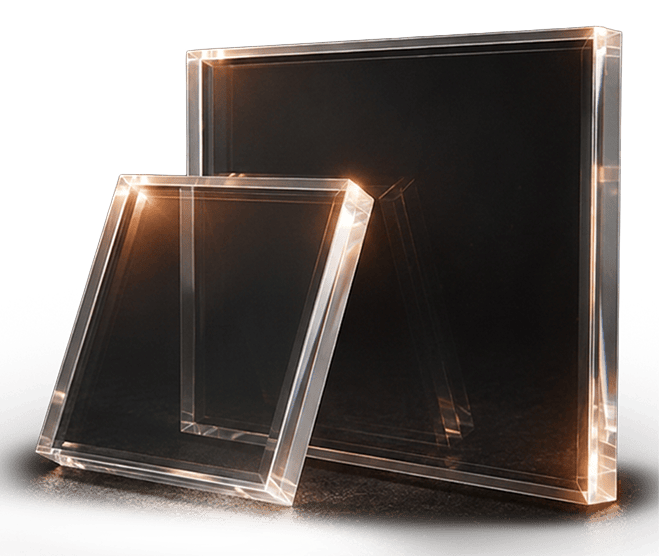
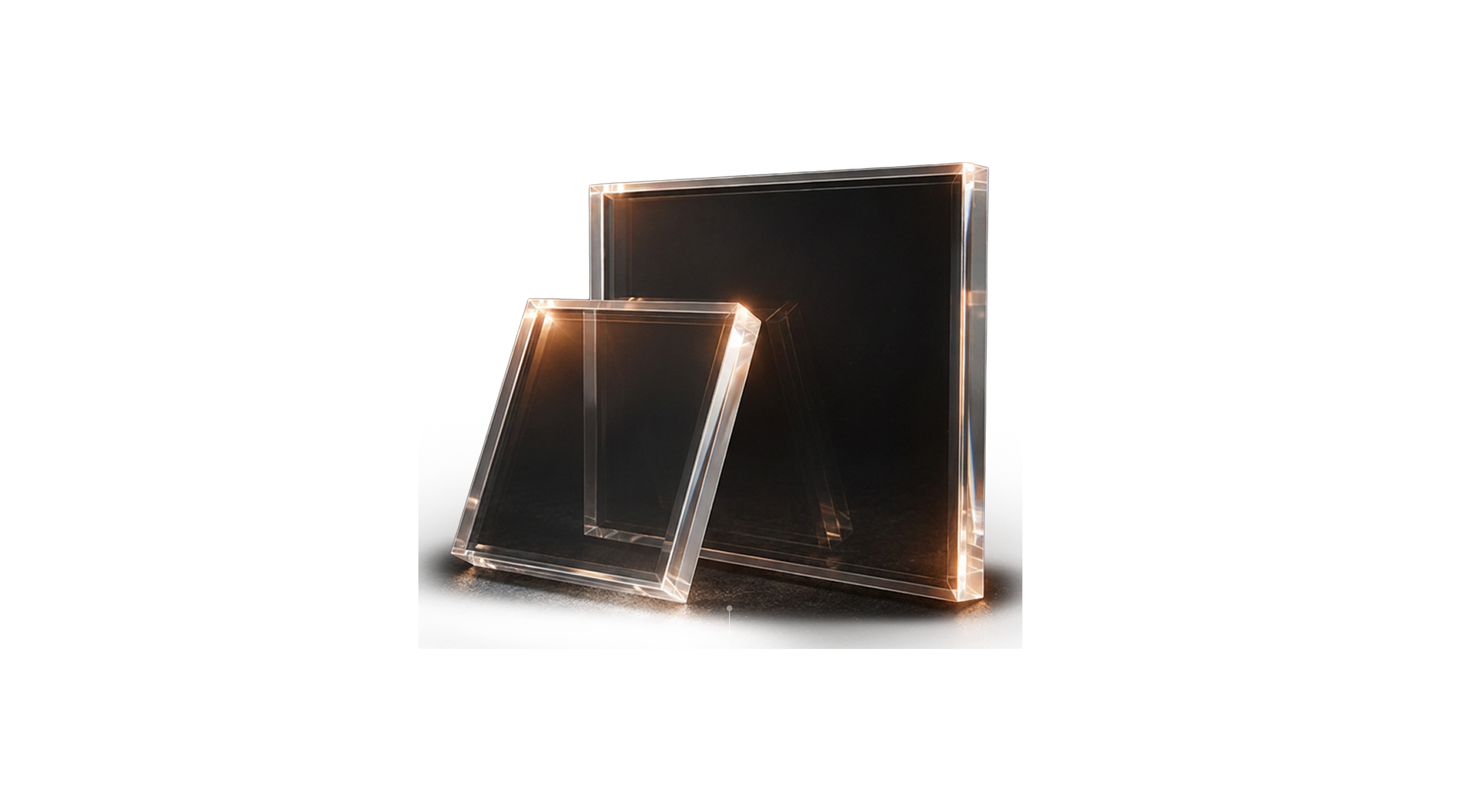
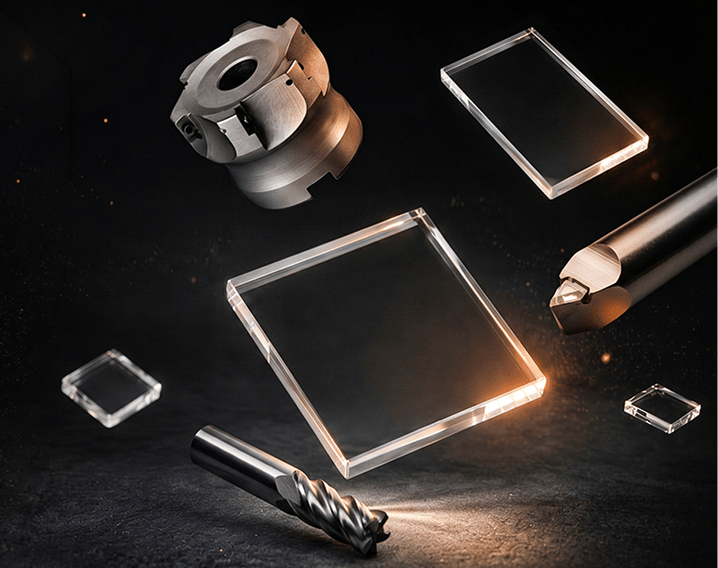
Aga9's single crystal diamond rough is grown using the Chemical Vapour Deposition (CVD) process. Customizable to your required size, shape and thickness, it delivers superior surface finish, tool life and accuracy.

download our brochure

Why CVD Rough?

Tool performance starts with the material that goes into it. Our chemical vapor deposition process yields unmatched purity and control.

One Continuous Crystal

Grown as a single, uninterrupted crystal lattice with no grain boundaries for a sharper and more uniform edge.

Controlled Growth

Manufactured via microwave plasma chemical vapor deposition, its properties are controlled during growth.

The Results For Your Tools

Longer Tool Life
Precise Edges
Reliable Performance
Supreme Hardness
Chemical Inertness

MATERIAL PROPERTIES

Thermal Conductivity

Superior heat dissipation

~2000 W/m·K

Surface Roughness

Mirror-like finish achievable

3–6 nm Ra

Fracture Toughness

Precise edge design

~2–5 MPa√m

Hardness

Hardest known material

10,000 HV

Cutting Edge Quality

Stable, sharp, long-lasting edges

NOTCH FREE

APPLICATIONS

Milling

A milling tool is a rotary cutting tool with multiple cutting edges that remove material from a workpiece as it spins. Tool manufacturing can be a costly endeavor if it requires frequent replacements. Diamond tools exhibit extraordinary resistance to tool wear. 

Benefits: Sharp Edges, Wear Resistance and Extended Tool Life

Applications: Single Point Diamond Turning (SPDT), Diamond Fly Cutting, Diamond Drilling and Diamond End Milling.
Drilling

The most valuable characteristic of optical-grade diamond plates is their wide optical transparency. It ranges from ultraviolet to far-infrared electromagnetic spectrum.

The high refractive index of 2.38 and low optical absorption coefficient results in minimal signal loss and high-resolution performance across different wavelengths. 

Turning

The most valuable characteristic of optical-grade diamond plates is their wide optical transparency. It ranges from ultraviolet to far-infrared electromagnetic spectrum.

The high refractive index of 2.38 and low optical absorption coefficient results in minimal signal loss and high-resolution performance across different wavelengths. 

WHY CHOOSE AGA9?

Competitive Pricing 
Custom Specifications
Superior Quality
In-house Manufacturing
Technical Expertise
Competitive Pricing 
Custom Specifications
Superior Quality
In-house Manufacturing
Technical Expertise

Contact Us

Reach out to us, and our team will get back to you promptly. We value your feedback and are always ready to assist you.

VISIT US

551 5th Avenue 31st Floor NY, NY 10176 USA

+1
Thank you! Your submission has been received!
Oops! Something went wrong while submitting the form.

Frequently Asked Questions

Get insights on lab-grown diamond plates, their benefits and solutions to demanding
industrial applications:

Which industries use CVD diamond plates?
CVD lab-grown diamond plates are used in opto-electronic, ultra-high vacuum (UHV) windows, high-power laser windows, tool manufacturing and power-electronic device manufacturing.
How stable are lab-grown diamonds under heat?
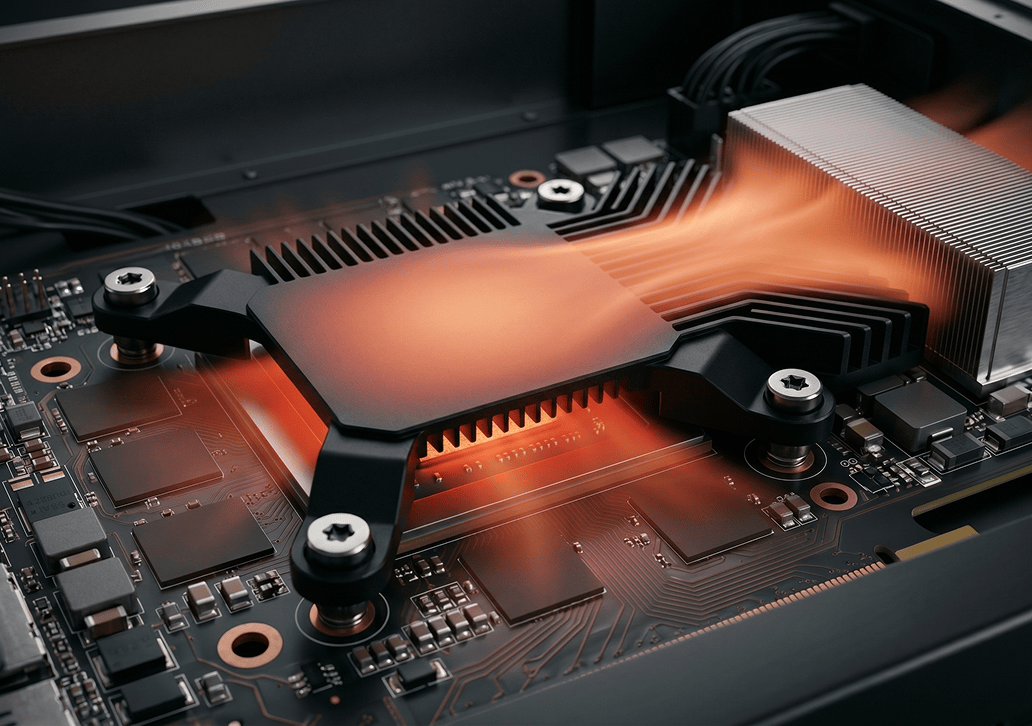
The maximum operating temperature of lab-grown diamonds stands at 2200 W/mK which is five times more than copper and four times higher than silicon carbide. These characteristics make lab-grown diamonds ideal for managing heat in high-power devices.
What are single-crystal diamond plates?
Single crystal diamond plates are diamond plates manufactured from one continuous diamond crystal lattice. This gives these diamond plates uniformity, mechanical strength and excellent thermal properties.
What is diamond cooling?
Diamond cooling is the process of deploying diamonds for managing and dissipating heat in electronic devices. It is an advanced cooling mechanism to effectively drive away heat from critical components.
Who are the founders of AGA9?
AGA9 was founded by Anil Poddar and Gargi Poddar. Anil Poddar, a veteran entrepreneur has over 40 years of experience in the natural and lab-grown diamond industry. Gargi Poddar brings her years of experience across sales and marketing and envisions a future where lab-grown diamonds will become an essential material for thermal management.

To learn more about our founder's journey, please click here.
Does AGA9 work with any IIT university?
AGA9 has collaborated with the Indian Institute of Technology (IIT) Bombay.
What temperature is used for CVD diamond growth?
CVD diamonds grow at low pressure and low temperature which is typically around 800-1000 torr and 800-1000 degrees Celsius respectively.
Which gases are used for CVD growth?
CVD diamonds are grown via a combination of gases - high-purity methane (CH4) and ultra-high purity hydrogen (H2).
How are lab-grown diamonds grown?
Lab-grown diamonds are mainly produced using two different growth processes including - CVD and HPHT.
How does AGA9 maintain product quality?
At AGA9, we ensure that our diamond plates are created with the lowest impurities and deliver exceptional surface finish. Our diamond crystals undergo no residual stress and are considered to be highly durable.